Trillium Engineering
5 min read
BOTBLOX SYSTEMS
MISSION
Develop the world's most compact ruggedized USB 3.0 to Gigabit Ethernet converter for tactical UAS payloads exposed to sustained vibration, temperature extremes, and electromagnetic interference.

Trillium Engineering
THE COMPANY
Trillium Engineering designs high-performance gimbal and payload systems for small tactical UAS. Based in Hood River, Oregon, they supply EO/IR camera payloads for defense, surveillance, and commercial drone operations.


Resume
The Challenge: USB-to-Ethernet Conversion That Survives Tactical Drone Environments
Trillium Engineering’s gimbal and payload systems frequently need to bridge USB 3.0 interfaces with Ethernet networks inside small UAS airframes. Standard USB-to-Ethernet adapters available on the commercial market are designed for desktop or office environments. They fail predictably in the conditions that tactical drone payloads experience during flight operations.
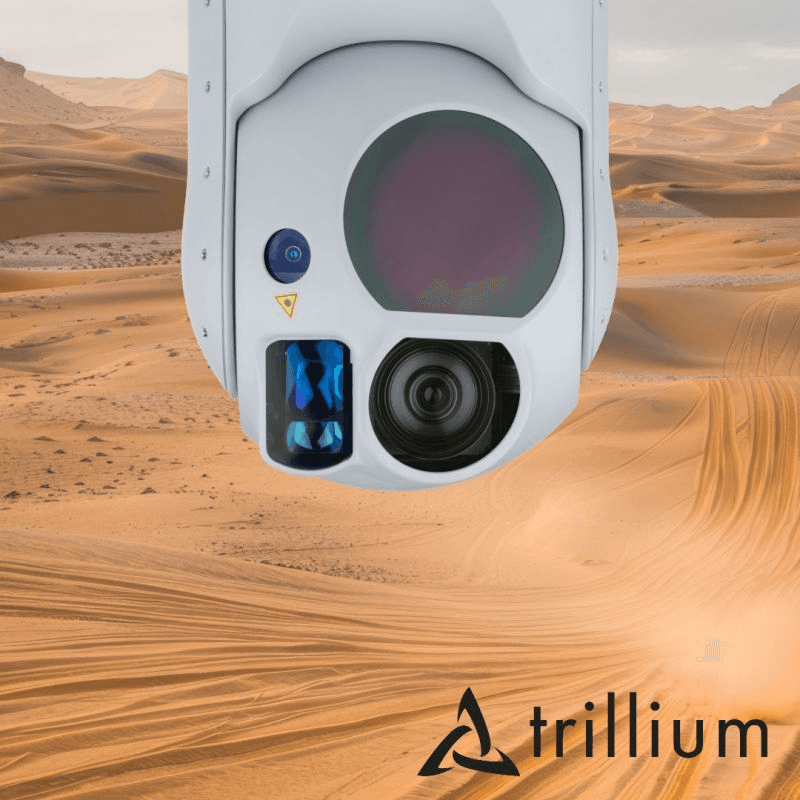
Three specific failure modes made commercial USB-to-Ethernet converters unsuitable for Trillium’s applications:
Vibration-induced disconnection. Standard USB connectors use friction-fit mating that relies on contact pressure alone. Under the sustained vibration profiles generated by drone motors, propellers, and airframe resonance, friction-fit USB connections loosen and disconnect intermittently. Even brief disconnections cause data stream interruptions that compromise sensor performance during critical flight operations.
Electromagnetic interference from motors and radios. Small UAS airframes pack motors, electronic speed controllers, radio transceivers, and sensor payloads into a confined volume. The electromagnetic interference generated by these components can corrupt data on unshielded USB-to-Ethernet conversion circuits, causing packet errors, throughput degradation, or complete link failure.
Commercial-grade chipsets with insufficient temperature range. Most commercial USB-to-Ethernet adapters use consumer-grade chipsets such as the Realtek RTL8153, which are rated for 0 to 70 degrees Celsius operating temperature. Tactical UAS operations routinely expose payload electronics to temperatures outside this range, particularly at altitude or in hot-climate ground operations.
Trillium needed a USB 3.0 to Gigabit Ethernet converter that was compact enough for integration inside small drone payloads, ruggedized for sustained vibration and EMI exposure, and built with industrial-grade components rated for extended temperature operation.
The Solution: USBBlox with Industrial-Grade Design
BotBlox developed USBBlox in collaboration with Trillium Engineering to address the specific failure modes that commercial converters cannot survive. USBBlox is the world’s most compact ruggedized USB 3.0 to 10/100/1000M Ethernet converter, designed from the ground up for embedded integration in drones and robotic systems.
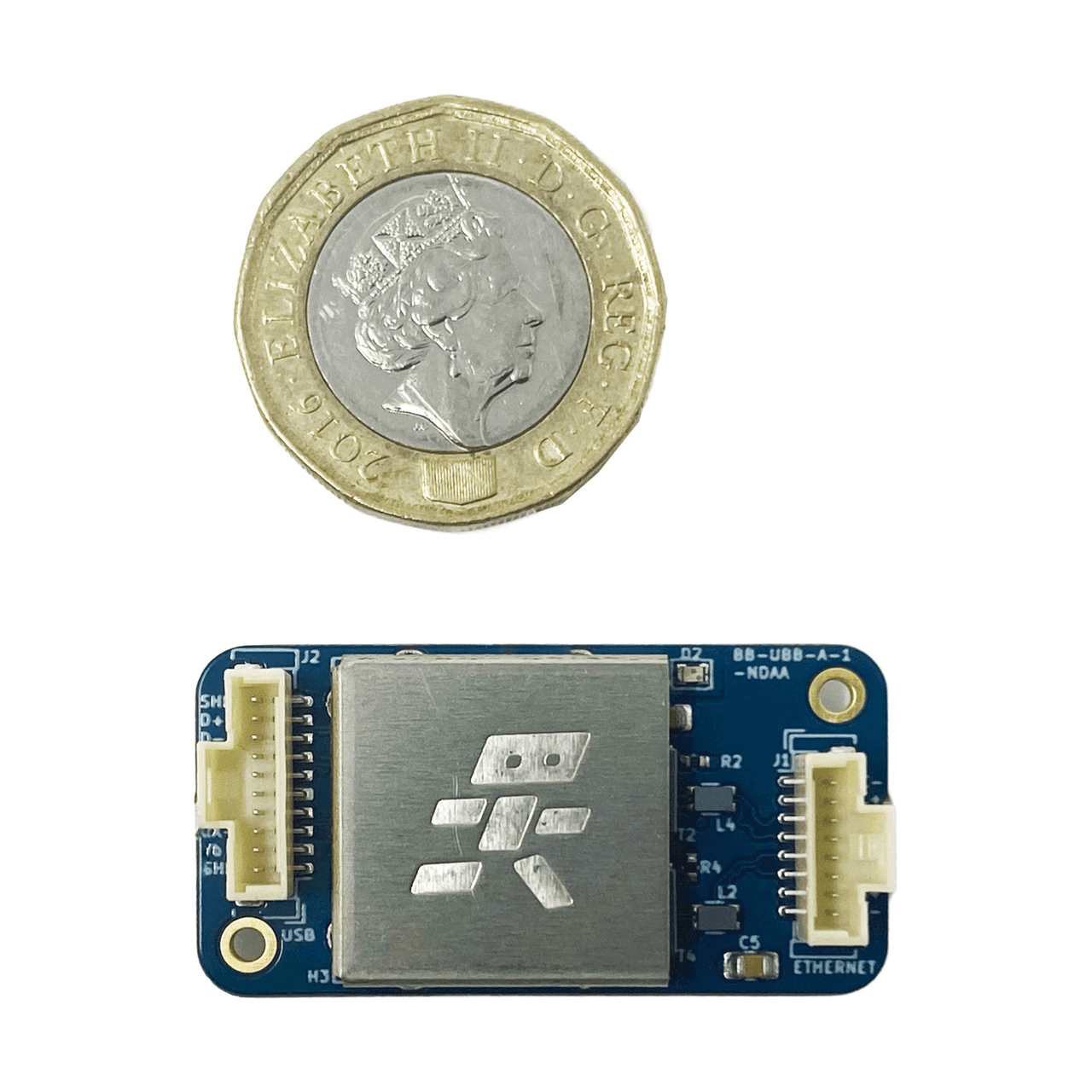
Three key engineering decisions differentiate USBBlox from commercial alternatives:
Industrial-grade Microchip LAN7800 chipset. USBBlox uses the Microchip LAN7800 USB 3.0 to Gigabit Ethernet controller, which carries an industrial temperature rating (-40 to +85 degrees Celsius) and a proven reliability track record in embedded applications. This replaces the consumer-grade Realtek RTL8153 used in virtually all commercial USB-to-Ethernet adapters, providing significantly wider operating temperature margins and better long-term reliability under thermal cycling.
Vibration-resistant Molex PicoClasp connectors. USBBlox replaces standard friction-fit USB connectors with Molex PicoClasp positive-locking connectors. PicoClasp connectors use a mechanical latch that prevents disconnection under vibration, ensuring continuous electrical contact during sustained high-vibration drone flight operations. The USB connection between USBBlox and the host system uses a shielded USB-to-Molex PicoClasp cable, maintaining both signal integrity and physical connection security.
Custom EMI shielding. USBBlox incorporates on-board EMI shielding designed to protect the USB-to-Ethernet conversion circuit from electromagnetic interference generated by nearby motors, electronic speed controllers, and radio transceivers. The shielding design was validated through formal EMC testing to ensure compliance with electromagnetic compatibility standards for drone integration.
The Results: EMC-Certified Compact Conversion for UAS Payloads
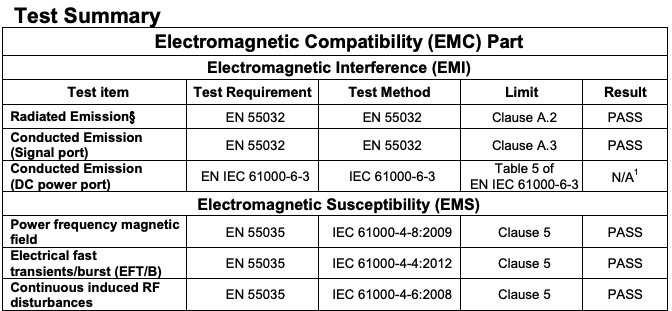
EMC testing passed. USBBlox completed formal electromagnetic compatibility testing in May 2024, confirming that the device maintains full USB 3.0 to Gigabit Ethernet conversion performance under EMI conditions representative of operational small UAS environments. This certification provides Trillium Engineering and other integrators with documented confidence that USBBlox will not degrade network performance when installed near motors, radios, or other noise sources.
The full EMC test report is available here.
Compact form factor. USBBlox achieves the smallest available footprint for a ruggedized USB 3.0 to Gigabit Ethernet converter, enabling integration into space-constrained drone payloads and robotic systems where standard commercial adapters cannot physically fit.
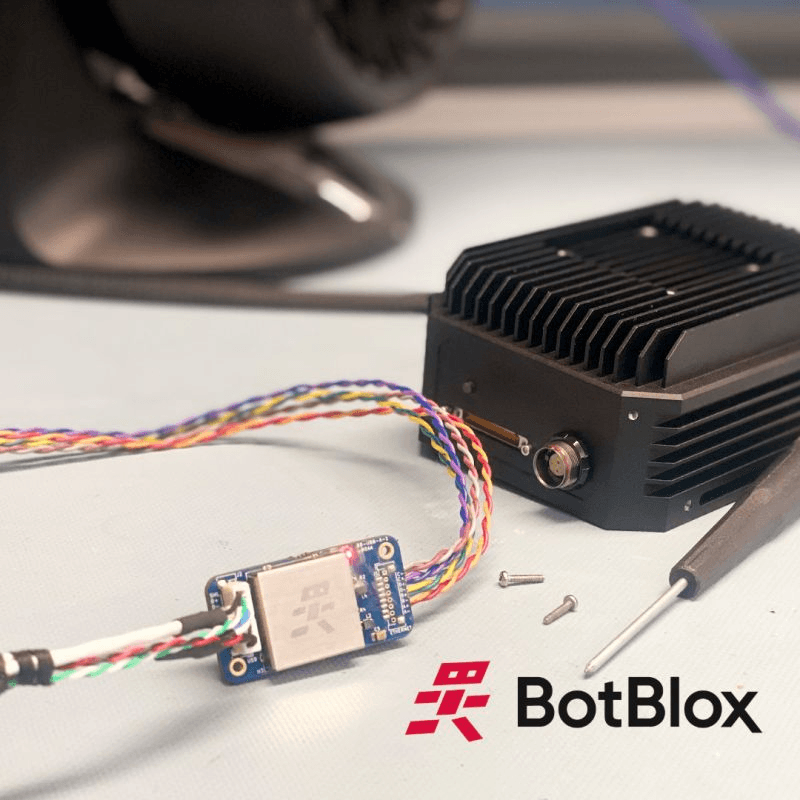
Reliable operation under vibration. The Molex PicoClasp positive-locking connector system eliminates the vibration-induced disconnection failures that plague standard USB connections in drone applications. USBBlox maintains continuous data connectivity throughout sustained flight operations without requiring additional mechanical retention hardware.
Drop-in integration for UAS platforms. USBBlox provides a direct interface between USB 3.0 sensor outputs and Gigabit Ethernet onboard networks, enabling Trillium Engineering to bridge payload sensors with airframe data systems using a single compact, ruggedized component rather than multiple fragile commercial adapters.
