MIT Motorsports

Automotive Ethernet for a Student-Built Formula SAE Race Car

Automotive Ethernet for a Student-Built Formula SAE Race Car

5 min read

BOTBLOX SYSTEMS

MISSION

Integrate a 100BASE-T1 Automotive Ethernet LiDAR into an electric Formula SAE race car without redesigning the vehicle's tightly packaged network.

BotBlox Systems logo

MIT Motorsports

THE COMPANY

MIT Motorsports is MIT's student-run Formula SAE Electric team, designing, building and racing a brand-new electric formula-style race car every year against more than 600 universities.

Trillium Engineering logo
BotBlox logo icon

Resume

How MIT Motorsports used the BotBlox SPEBlox 100M to integrate a Hesai ATX LiDAR over 100BASE-T1 Automotive Ethernet in their electric Formula SAE race car.

How MIT Motorsports used the BotBlox SPEBlox 100M to integrate a Hesai ATX LiDAR over 100BASE-T1 Automotive Ethernet in their electric Formula SAE race car.

Inside MIT Motorsports

Every year, MIT Motorsports takes on a challenge that would intimidate most professional engineering teams: designing, manufacturing, and racing an entirely new electric Formula-style race car from the ground up.

As a student-run organization competing in Formula SAE Electric, the world’s largest collegiate engineering design competition, with more than 600 universities, team members routinely devote 20+ hours per week outside of full-time coursework. Building a competitive car means sweating the small stuff: every gram, every watt, every data packet, and every component.
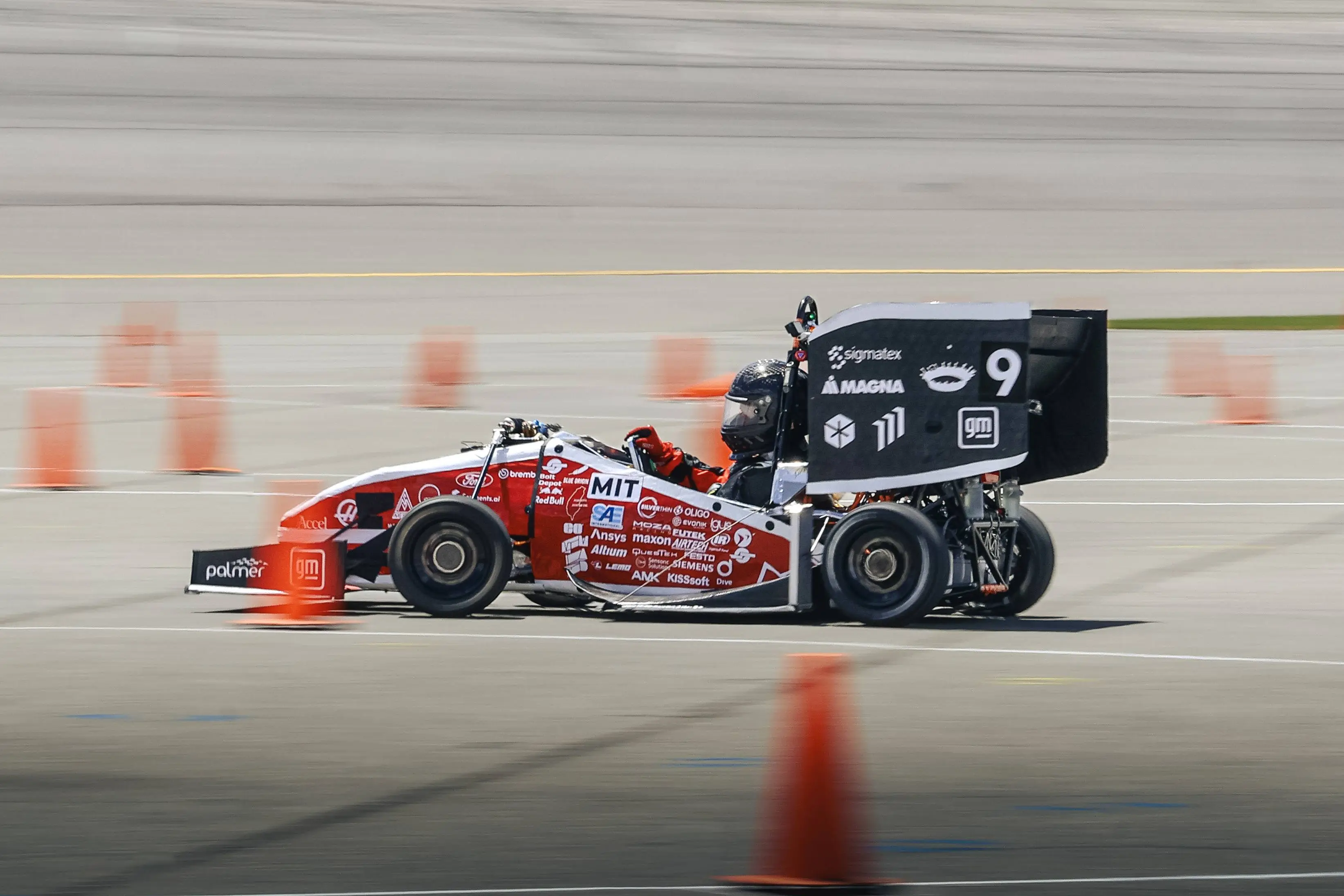
MIT Motorsports electric Formula SAE race car at speed during competition

Upgrading the Sensor Stack Meant Upgrading the Network

MIT Motorsports had already integrated BotBlox’s SPEBlox 1G automotive Ethernet converter into previous vehicles, using it to interface with a Hesai OT128 LiDAR sensor. For the new race car, the team upgraded to the Hesai ATX LiDAR, and that hardware change introduced an important networking challenge.

Unlike the previous sensor, the Hesai ATX communicates over 100BASE-T1 Automotive Ethernet rather than Gigabit Automotive Ethernet. While both technologies share the same automotive Ethernet family, they operate under different physical layer standards and are not electrically compatible: using the wrong PHY would prevent the devices from establishing a link altogether.

The new LiDAR therefore required a converter specifically designed for 100BASE-T1 communication.
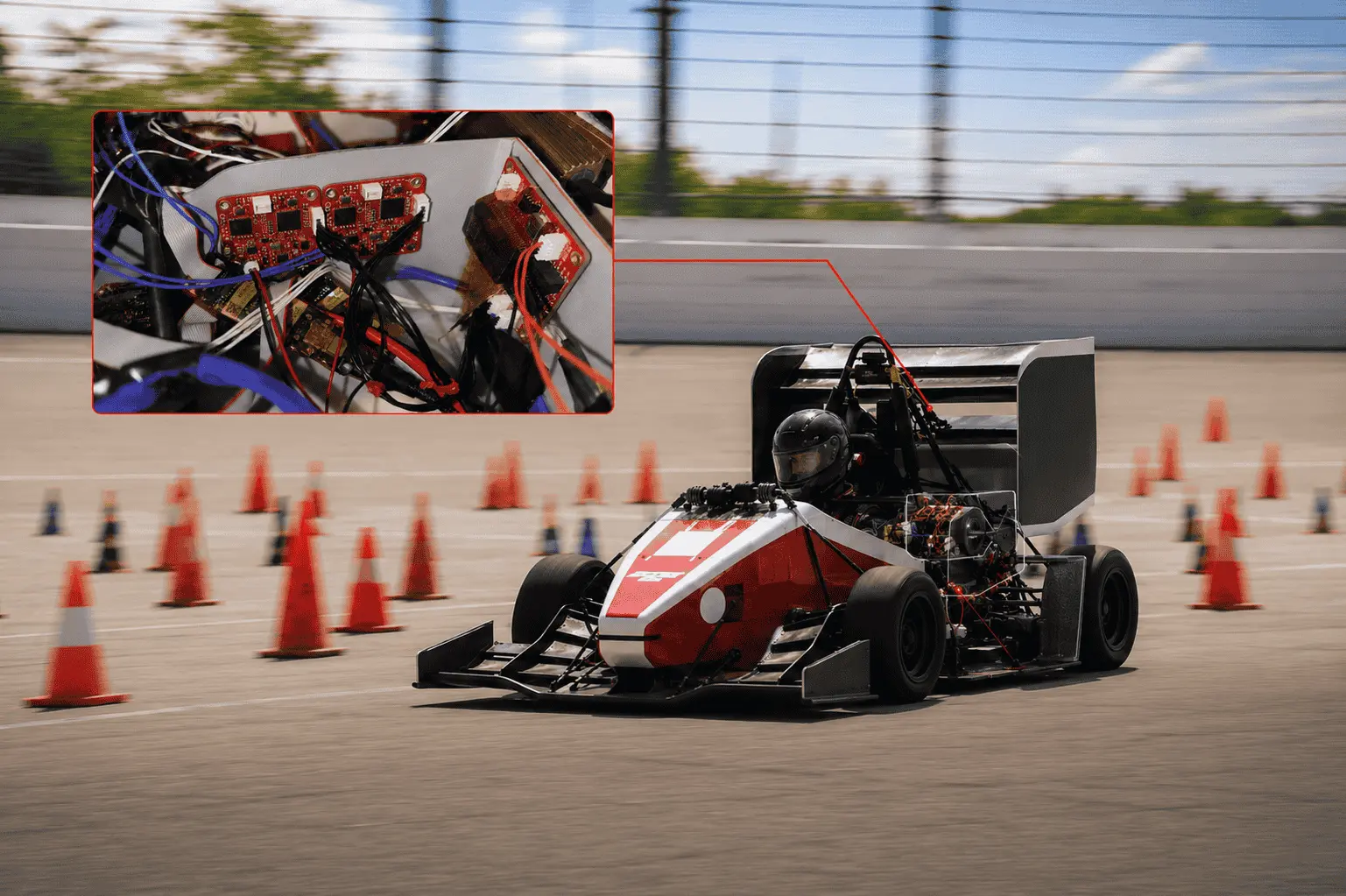
MIT Motorsports Formula SAE car on track with a detail view of the BotBlox boards integrated in its electronics bay

A Simple Hardware Swap

The swap was straightforward. The team replaced their previous converter with the SPEBlox 100M, BotBlox’s compact 100BASE-T1 Automotive Ethernet converter, allowing the Hesai ATX LiDAR to communicate seamlessly with the vehicle’s standard Ethernet network while preserving the compact, lightweight design required inside a Formula SAE car.
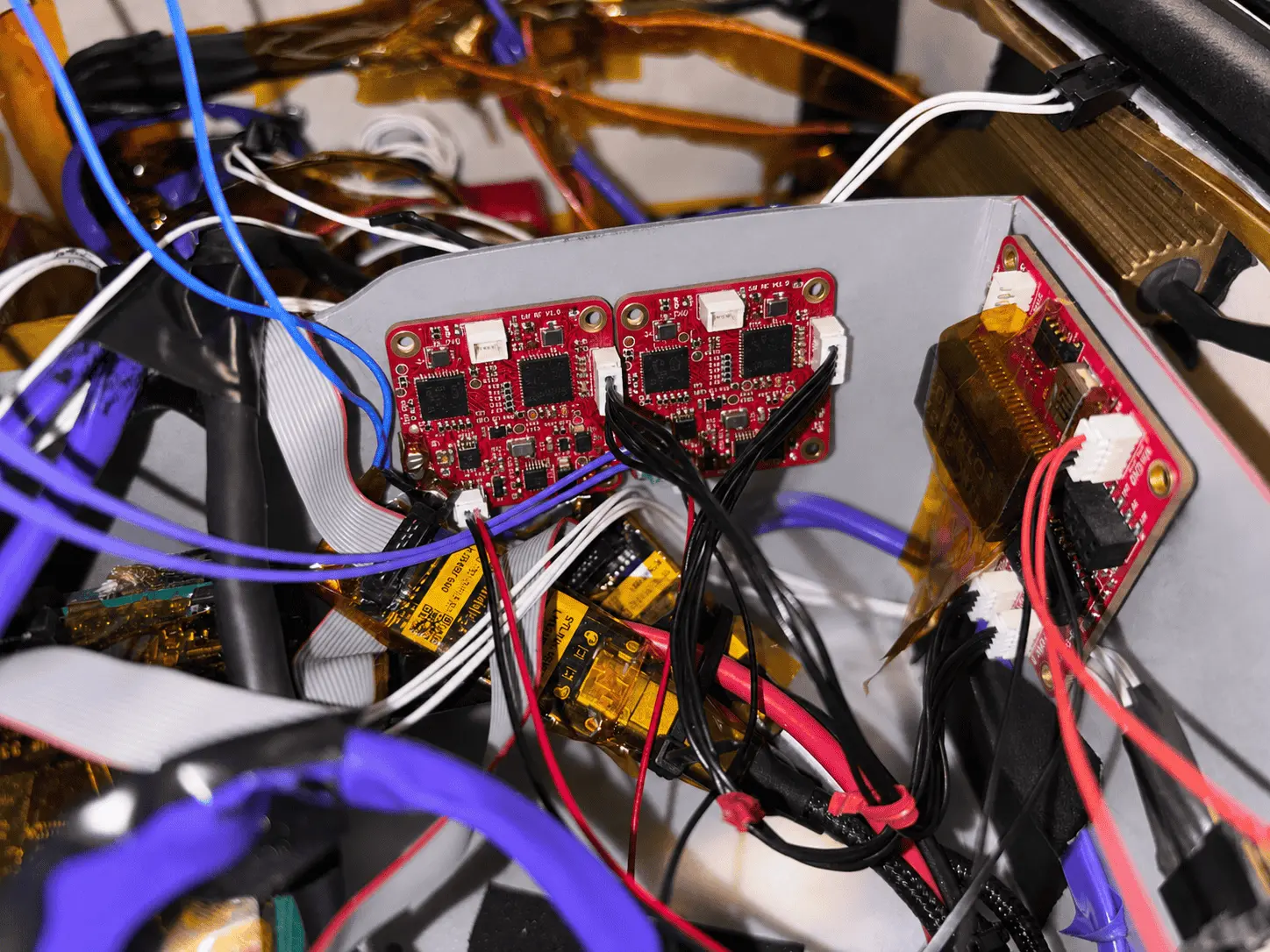
Close-up of BotBlox SPEBlox boards wired into the MIT Motorsports race car electronics

The Results

Formula SAE cars are exercises in optimization, where space, weight and reliability are all carefully considered. The SPEBlox 100M complemented those design priorities with its compact, lightweight form factor and native 100BASE-T1 support, enabling MIT Motorsports to integrate the new LiDAR without compromising the vehicle’s tightly engineered electronics architecture.
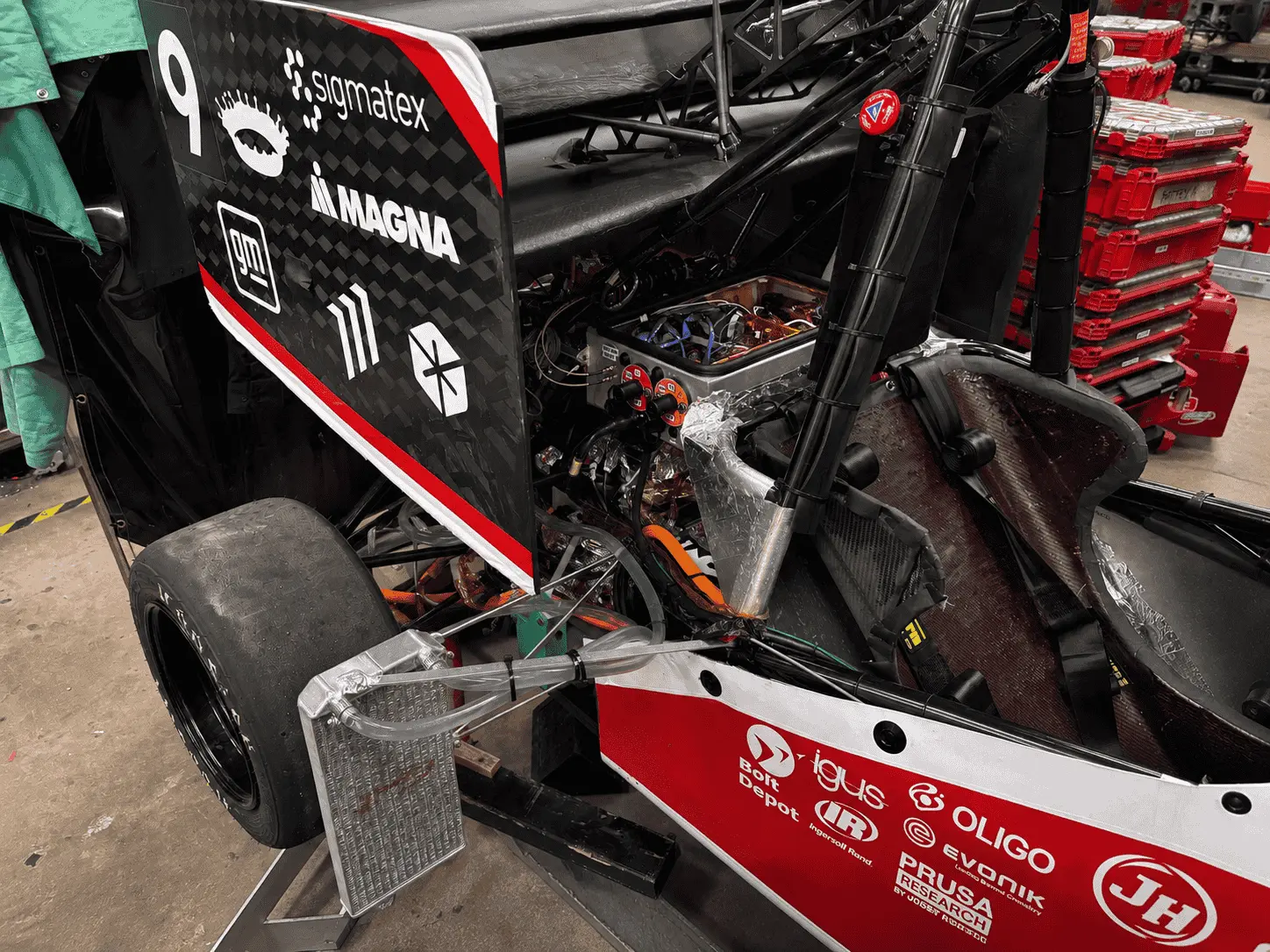
Rear of the MIT Motorsports car in the workshop, showing the onboard electronics enclosure

By offering specialized automotive Ethernet products in compact form factors, BotBlox enabled the engineering team to adopt new sensors and technologies without redesigning their entire network architecture. For MIT Motorsports, the SPEBlox 100M wasn’t just another component, it was a seamless way to integrate a new sensor and keep the project moving.

THE OTHERS CASE STUDIES

THE OTHERS CASE STUDIES

Discover more of our case studies

Discover more of our case studies

READ THE CASE STUDY

TRL11

A Multi-Camera Network for CubeSat Deployment

Jul 16, 2026

TRL11

A Multi-Camera Network for CubeSat Deployment

Jul 16, 2026

READ THE CASE STUDY

Global Foundation for Ocean Exploration

High-Speed Networking to the Bottom of the Ocean

Jul 16, 2026

Global Foundation for Ocean Exploration

High-Speed Networking to the Bottom of the Ocean

Jul 16, 2026

READ THE CASE STUDY

Griffon Aerospace

Networking the Valiant UAS

Jul 16, 2026

Griffon Aerospace

Networking the Valiant UAS

Jul 16, 2026

READ THE CASE STUDY

Overwatch Imaging

Networking AI-Powered Airborne Imaging Systems

Jul 16, 2026

Overwatch Imaging

Networking AI-Powered Airborne Imaging Systems

Jul 16, 2026

READ THE CASE STUDY

Trillium Engineering

Ruggedized USB-to-Ethernet Conversion for Tactical UAS Payloads

Aug 20, 2024

Trillium Engineering

Ruggedized USB-to-Ethernet Conversion for Tactical UAS Payloads

Aug 20, 2024

READ THE CASE STUDY

JettyRobot

Gigabit Ethernet Networking Inside Pipe Inspection Robots

Jun 15, 2024

JettyRobot

Gigabit Ethernet Networking Inside Pipe Inspection Robots

Jun 15, 2024

READ THE CASE STUDY

Vision iO

Long-Range Single Pair Ethernet for Downhole Oil and Gas Cameras

May 15, 2024

Vision iO

Long-Range Single Pair Ethernet for Downhole Oil and Gas Cameras

May 15, 2024

READ THE CASE STUDY

Ross Robotics

PoE-Powered Gigabit Vision for Autonomous Energy Infrastructure Robots

Mar 10, 2024

Ross Robotics

PoE-Powered Gigabit Vision for Autonomous Energy Infrastructure Robots

Mar 10, 2024

READ THE CASE STUDY

Remotion

Compact Gigabit Switching for Marine Hull Inspection Robots

Jan 20, 2024

Remotion

Compact Gigabit Switching for Marine Hull Inspection Robots

Jan 20, 2024

READ THE CASE STUDY

Danieli Automation-Telerobot

Ultra-Compact Ethernet Switching for Nuclear Fusion Inspection Robots

Nov 10, 2023

Danieli Automation-Telerobot

Ultra-Compact Ethernet Switching for Nuclear Fusion Inspection Robots

Nov 10, 2023