JettyRobot
5 min read
BOTBLOX SYSTEMS
MISSION
Integrate gigabit Ethernet switching into a pipe inspection robot small enough to navigate 200mm ducts, while maintaining full throughput over a 100-meter tethered connection to the surface.

JettyRobot
THE COMPANY
JettyRobot designs autonomous robots for industrial pipe and duct inspection. Their platforms navigate confined spaces to perform visual diagnostics, cleaning, and repair in oil and gas, energy, and heavy industry infrastructure.


Resume
The Challenge: Gigabit Networking in an Extremely Confined Space
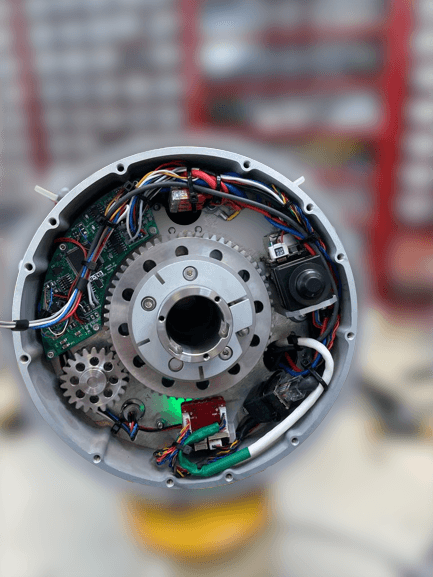
JettyRobot’s inspection robots operate inside industrial pipes and ducts of varying diameters. Every component must fit within a tightly packed electronics module that leaves almost no room for standard off-the-shelf networking hardware.
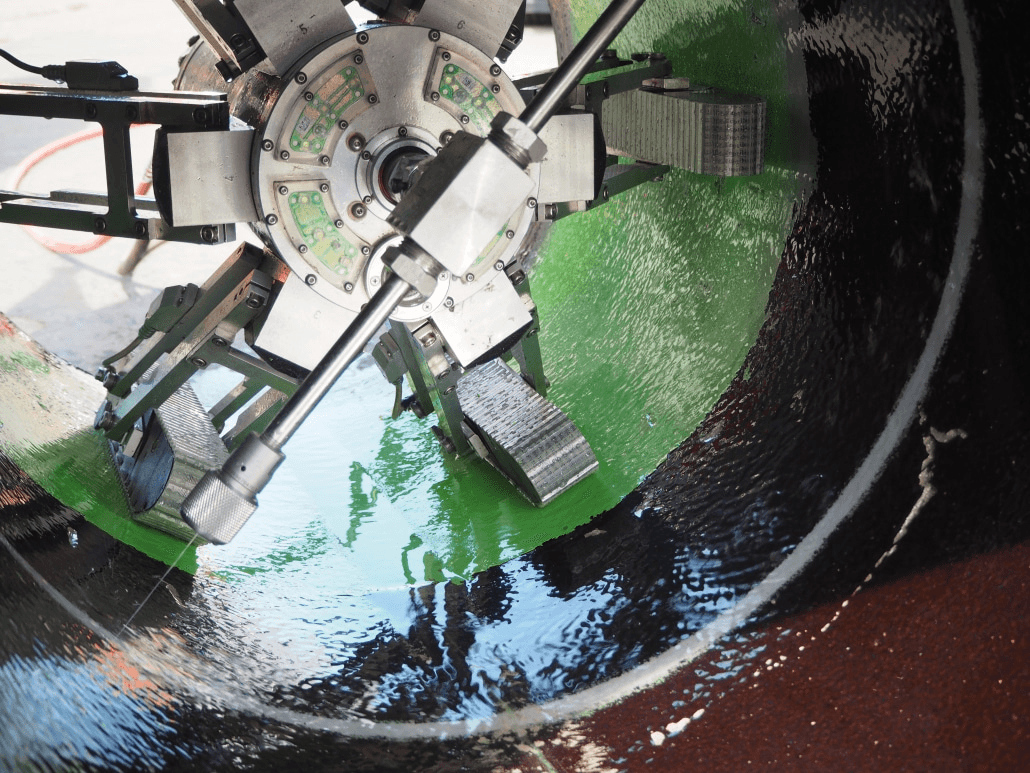
The robot’s architecture requires gigabit Ethernet connectivity for multiple onboard cameras and sensors, with all data transmitted over a single 100-meter Ethernet cable back to an operator control station at the surface. This creates two simultaneous engineering constraints that are difficult to solve together.

Constraint 1: Gigabit throughput is non-negotiable. Real-time visual inspection at production quality requires sustained gigabit data rates. 100 Mbps switches cannot support the camera resolution and frame rates needed for accurate defect detection in industrial pipe environments.
Constraint 2: Physical space is measured in millimeters. Industrial Ethernet switches designed for DIN rail mounting or panel installation are far too large for integration inside a pipe inspection robot. Even compact embedded switches typically exceed the available board area inside JettyRobot’s electronics module.
Standard industrial networking solutions forced JettyRobot into a trade-off between performance and physical size. The team needed a gigabit Ethernet switch small enough to fit inside the robot without compromising throughput or connection reliability over the full 100-meter tether length.

The Solution: GigaBlox Nano with a Custom Daughterboard
BotBlox GigaBlox Nano provided the core networking capability in a footprint of approximately one square inch. As the smallest gigabit Ethernet switch available for embedded integration, GigaBlox Nano delivers full 1 Gbps switching across multiple ports without requiring external heatsinking or large support circuitry.
To match JettyRobot’s specific architecture, BotBlox designed a custom daughterboard that extends the GigaBlox Nano with the exact port configuration the robot requires:
One Ethernet port with integrated magnetics transformer for the 100-meter tethered connection to the surface control station. The transformer enables reliable signal integrity over the full cable length, maintaining gigabit throughput without packet loss.
Three Picoblade cable connections for internal devices including cameras and onboard sensors. Picoblade connectors minimize the physical footprint of each internal connection while providing secure, vibration-resistant mating.
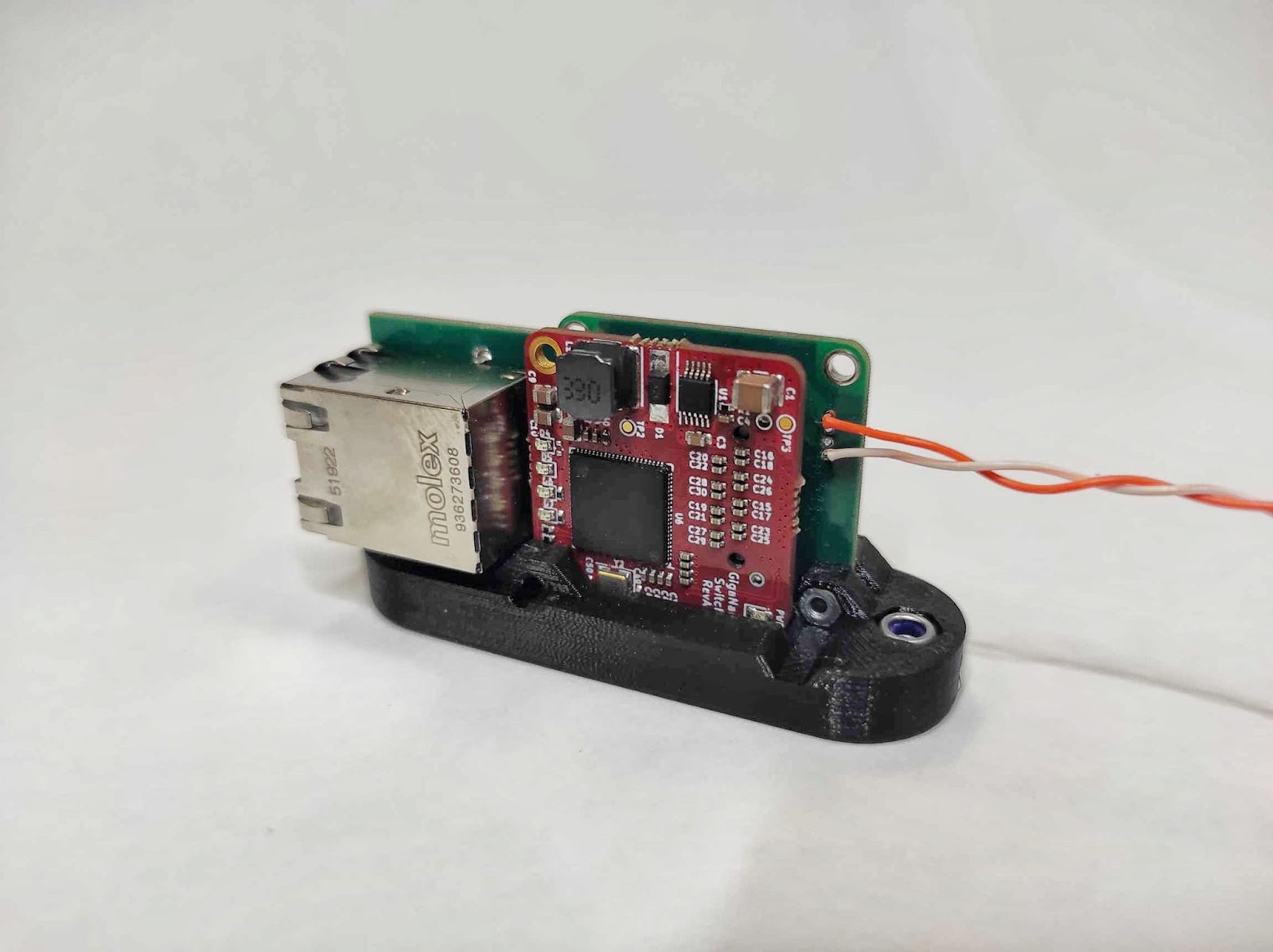
This modular approach allowed JettyRobot to place Ethernet magnetics only where they are physically needed (on the long-distance uplink port) rather than on every port. Eliminating unnecessary transformers on the internal ports reduced board area, component height, and overall weight.
The custom daughterboard was designed to mount directly to the GigaBlox Nano, creating a single integrated assembly that drops into JettyRobot’s electronics module without requiring additional cabling or mounting hardware inside the robot.
The Results: Full Gigabit Performance in a Minimal Footprint
The GigaBlox Nano integration achieved all of JettyRobot’s networking requirements within the severe space constraints of a pipe inspection robot.
Sustained gigabit throughput. All onboard cameras and sensors operate at full gigabit data rates, enabling high-resolution real-time visual inspection feeds transmitted to the surface control station without frame drops or bandwidth bottlenecks.
100-meter tethered connectivity. The integrated magnetics transformer on the uplink port maintains full signal integrity over the complete 100-meter cable length, allowing the robot to operate deep inside industrial pipe networks without degraded network performance.
Minimal board area. The complete GigaBlox Nano plus daughterboard assembly occupies approximately one square inch of board space, fitting within JettyRobot’s electronics module alongside all other onboard systems.
Production deployment. Following successful integration and field validation, GigaBlox Nano has been deployed in JettyRobot’s latest generation of inspection robots, confirming the solution’s reliability in real operational conditions across industrial inspection campaigns.
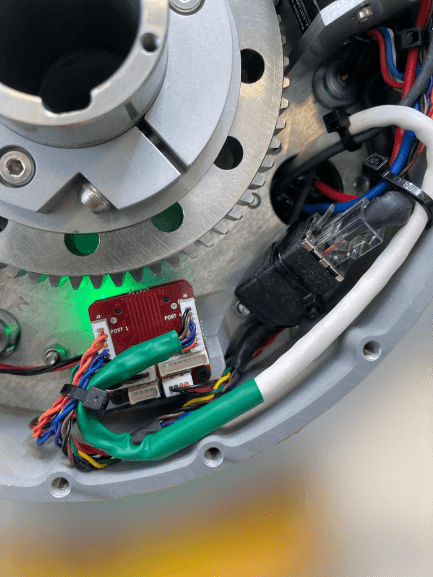
The modular design of BotBlox’s embedded switch platform allowed JettyRobot to achieve gigabit networking performance that would typically require a switch three to five times larger, without compromising on throughput, port count, or connection reliability.