SwitchBlox Nano 5V Output Performance
4 min read

Author
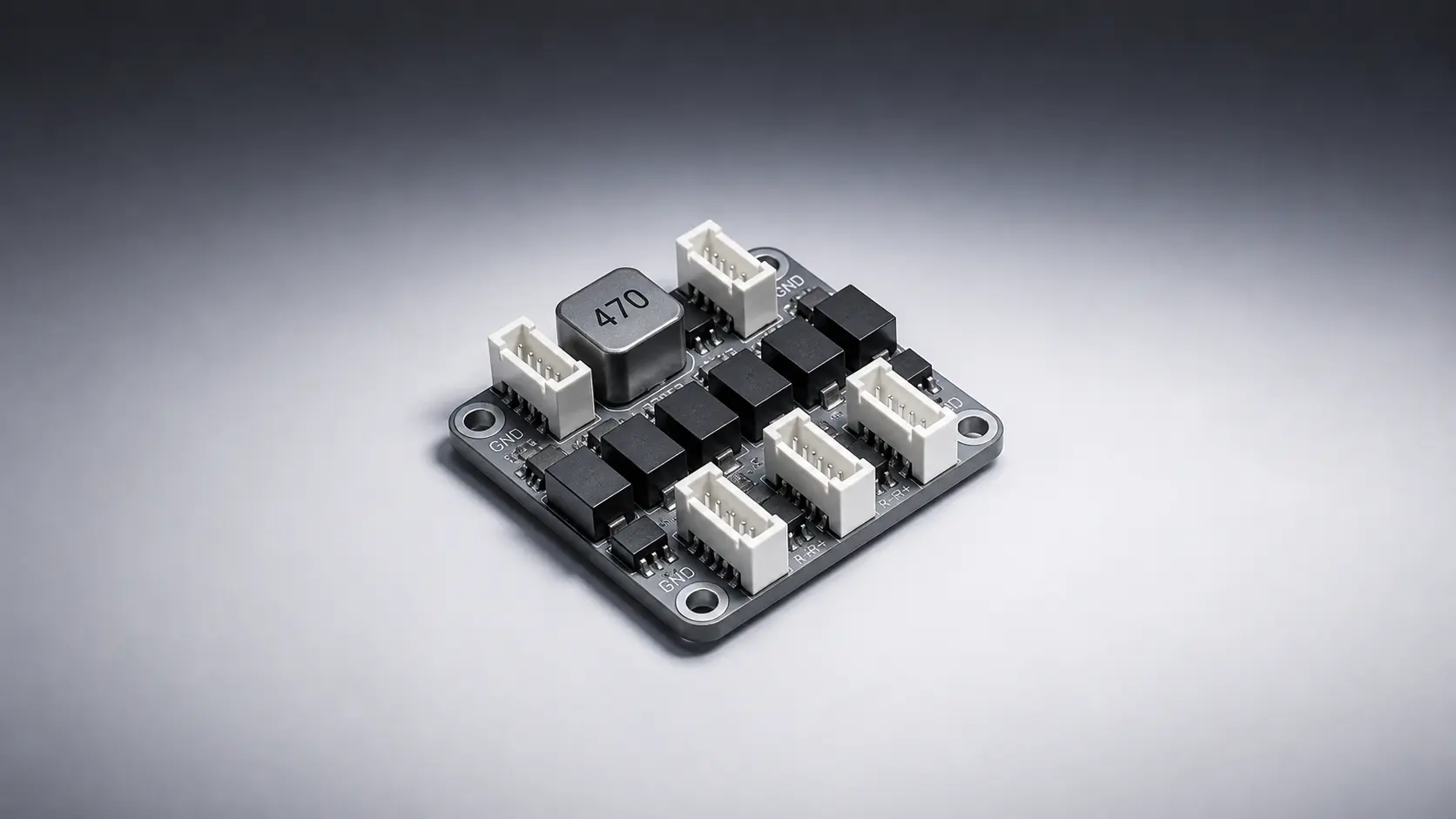
Performance & Benchmarks
SwitchBlox Nano includes a 5V output for powering downstream devices. The tests below quantify its voltage stability and thermal behaviour under load.
All results apply to SwitchBlox Nano revisions C, D, and E.
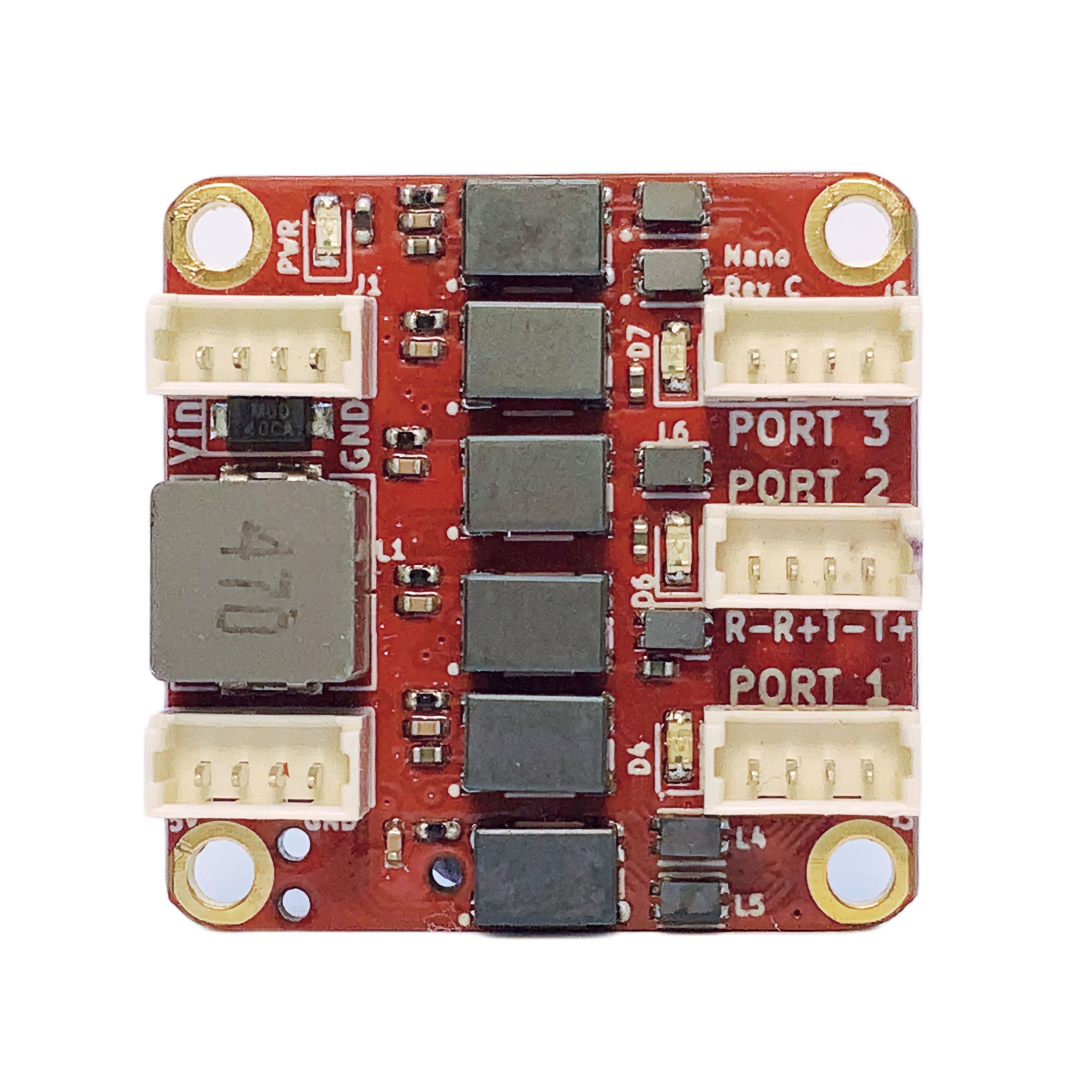
Test Setup
Ambient temperature: 20°C
Airflow: 0 LPM (no forced cooling)
SwitchBlox Nano operation: Idle, no active networking
Input voltage: 24V
Results
0A Output Current
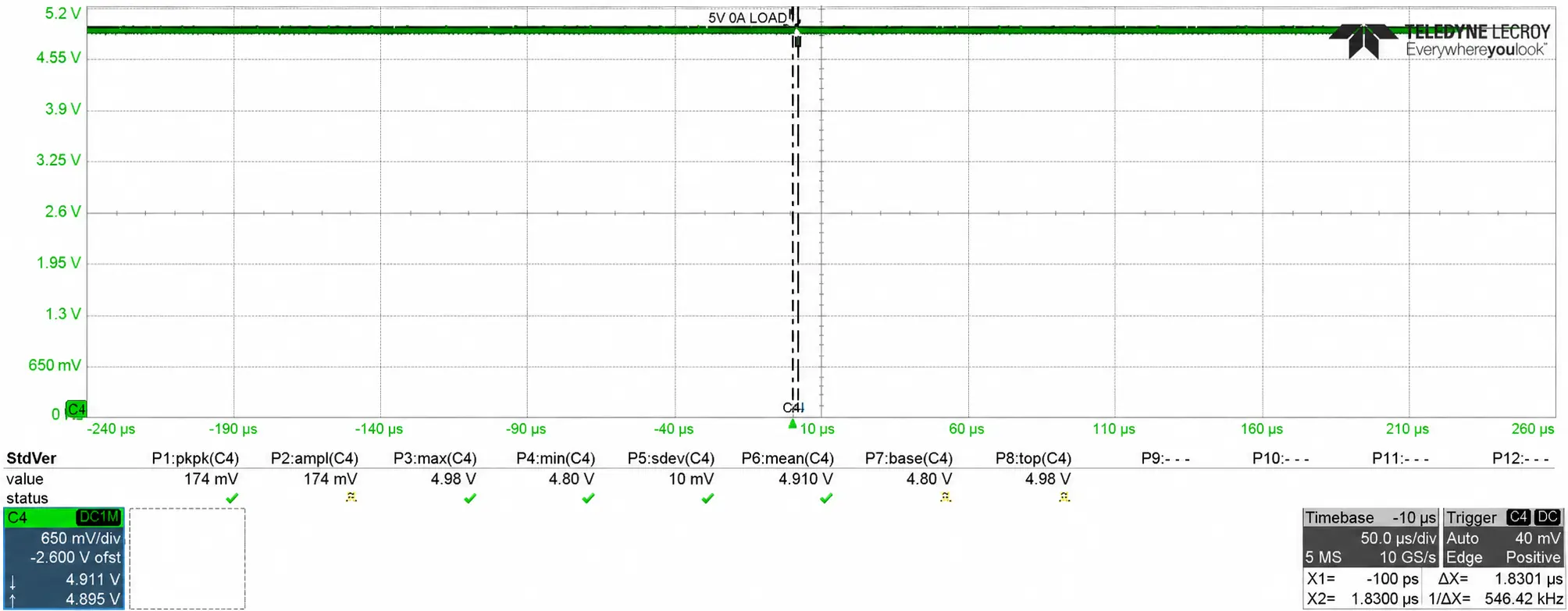
Mean output voltage: 4.91V
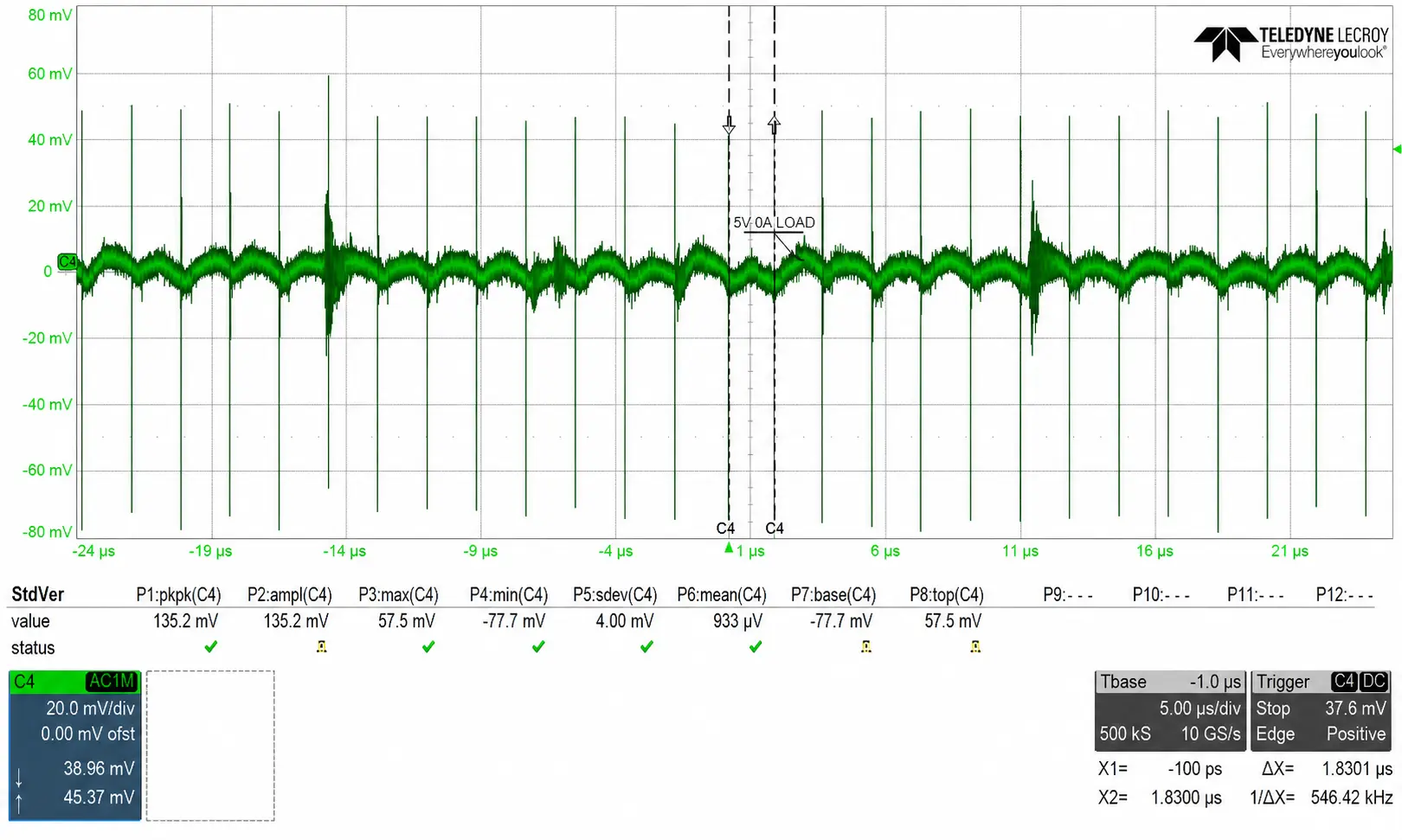
Ripple: 135.2 mV peak-to-peak (2.7% of DC level) at 546.42 kHz
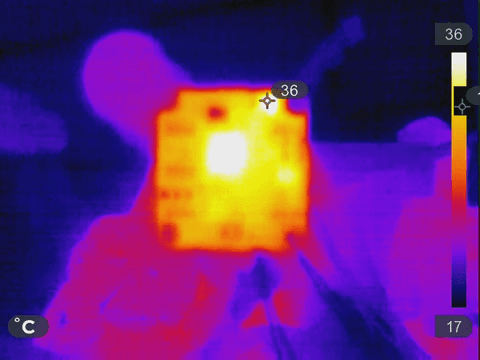
Maximum board temperature after 3 minutes: 36°C (+16°C above ambient)
1A Output Current
Mean output voltage: 4.91V (unchanged)
Ripple: 120 mV peak-to-peak (2.4% of DC level) at 546.42 kHz
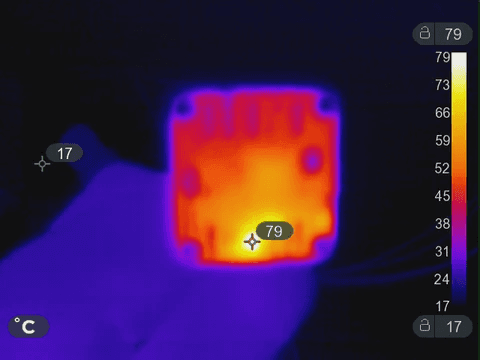
Maximum board temperature after 3 minutes: 79°C (+59°C above ambient)

Summary Table
Output Current | Mean Voltage | Ripple (mV) | Ripple (%) | Switching Freq. | Max Temp | Temp Rise |
|---|---|---|---|---|---|---|
0A | 4.91V | 135.2 mV | 2.7% | 546.42 kHz | 36°C | +16°C |
1A | 4.91V | 120 mV | 2.4% | 546.42 kHz | 79°C | +59°C |
What This Means in Practice
Counter-intuitively, ripple is slightly lower at 1A than at 0A — this is normal behaviour for switching regulators, which tend to regulate more tightly under load.
The 546 kHz switching frequency is consistent with the device’s specified 555 kHz.
The main constraint to be aware of: loads exceeding approximately 1.1A cause voltage dropout and device shutdown. Stay below this threshold to ensure reliable operation.
The temperature rise at 1A (+59°C) is the most significant design consideration. In an ambient environment of 20°C the board reaches 79°C — this is a direct consequence of the compact form factor. If your application draws close to 1A continuously, ensure adequate thermal management or consider whether airflow can be introduced.


