Designing NDAA and EO 13981 Compliant Drone Components
6 min read

Author

Compliance & Testing
Designing NDAA and Executive Order 13981 Compliant Drone Components: A Practical Guide
The National Defense Authorization Act (NDAA) and Executive Order 13981 are two regulatory frameworks designed to reduce technological dependency on adversarial nations and strengthen supply chain security across the U.S. defense industrial base. For drone manufacturers, UAS system integrators, and embedded hardware designers, compliance with both frameworks has become a prerequisite for accessing government contracts and defense procurement channels.
An update from November 2023 further aligned NDAA compliance requirements with EO 13981, creating a more unified set of expectations for component-level traceability and country-of-origin verification. This guide breaks down the practical challenges of designing NDAA and EO 13981 compliant drone components, from PCB-level sourcing decisions to manufacturing location selection.
Understanding EO 13981 Compliance Requirements
Executive Order 13981, signed in January 2021, established requirements for the federal government to identify and address risks posed by UAS manufactured or assembled by covered foreign entities. Combined with NDAA Section 817, it creates a dual compliance framework that applies to both complete drone systems and their individual critical components.
Achieving compliance is more nuanced than simply avoiding Chinese-manufactured parts. According to the U.S. Geological Survey, approximately 95% of the world’s rare earth elements used in electronics manufacturing are sourced from or processed through China. Neither regulation provides a detailed compliance roadmap or an approved vendor list, which means engineering teams must develop their own sourcing strategies with full transparency and documentation.
The practical challenge is not whether compliance is possible. It is whether an organization can demonstrate compliance with verifiable evidence at every level of the bill of materials.
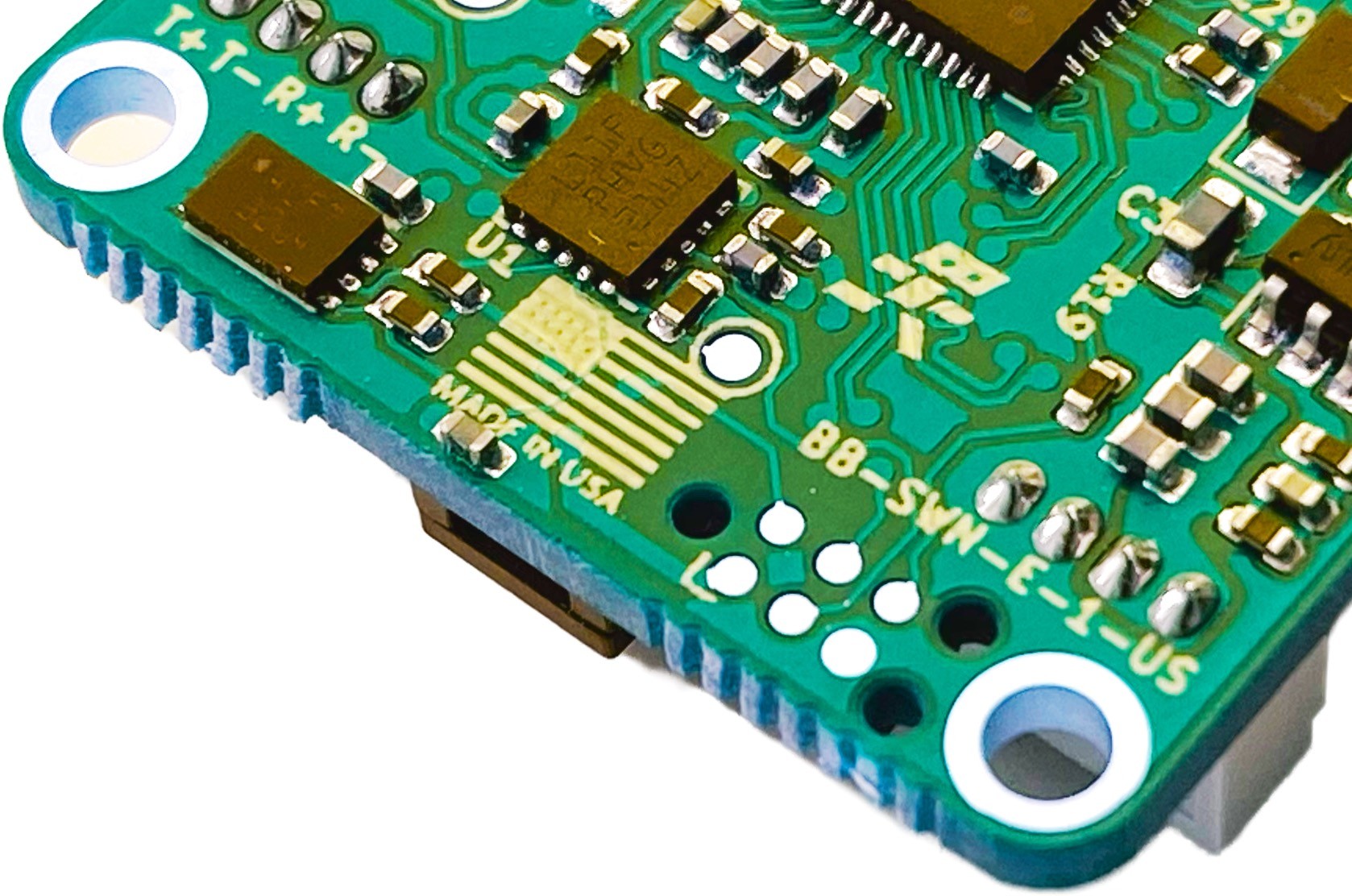
Deconstructing the PCB: Where Compliance Gets Complex
Printed circuit boards are the foundation of every electronic component in a UAS platform. Achieving NDAA and EO 13981 compliance at the PCB level requires evaluating five distinct categories of materials and components, each with its own sourcing challenges.
PCB Manufacturing Location
China accounts for approximately 52% of global PCB production capacity. The remaining market share is distributed across Taiwan (11.5%), South Korea (10.8%), Japan (8%), the Americas (4.9%), and Europe (3.7%).
Non-Chinese PCB manufacturing alternatives with proven capability for aerospace and defense-grade production include:
United States (high cost, strong traceability)
Estonia (growing defense electronics sector, EU-based)
Thailand (competitive pricing, established electronics infrastructure)
United Kingdom (proximity to European defense programs)
Selecting a non-Chinese PCB manufacturer is the first and most visible compliance decision, but it is only the starting point. The components placed on that PCB require equally rigorous verification.
Chemicals and Process Materials
Basic chemicals used in PCB manufacturing, such as flux, isopropyl alcohol, and cleaning solvents, are widely available from non-Chinese sources and represent minimal compliance risk.
However, strategic materials such as eutectic solder alloys and specialty adhesives warrant closer attention. Best practice is to source these materials directly and consign them to the contract manufacturer, maintaining full chain-of-custody documentation rather than relying on the manufacturer’s default supply chain.
Passive Components
Passive components such as resistors, capacitors, and inductors typically represent 20 to 30% of the total bill-of-materials cost. Rising labor costs in China have shifted much of the low-margin passive component manufacturing to Thailand and the Philippines over the past decade.
A key compliance risk with passives is distributor relabeling. Some U.S.-based distributors sell passive components under their own brand while sourcing the actual product from Chinese factories. Engineering teams should identify the actual manufacturer of each passive component and request country-of-origin documentation rather than relying on the distributor label.
Active Components (Integrated Circuits)
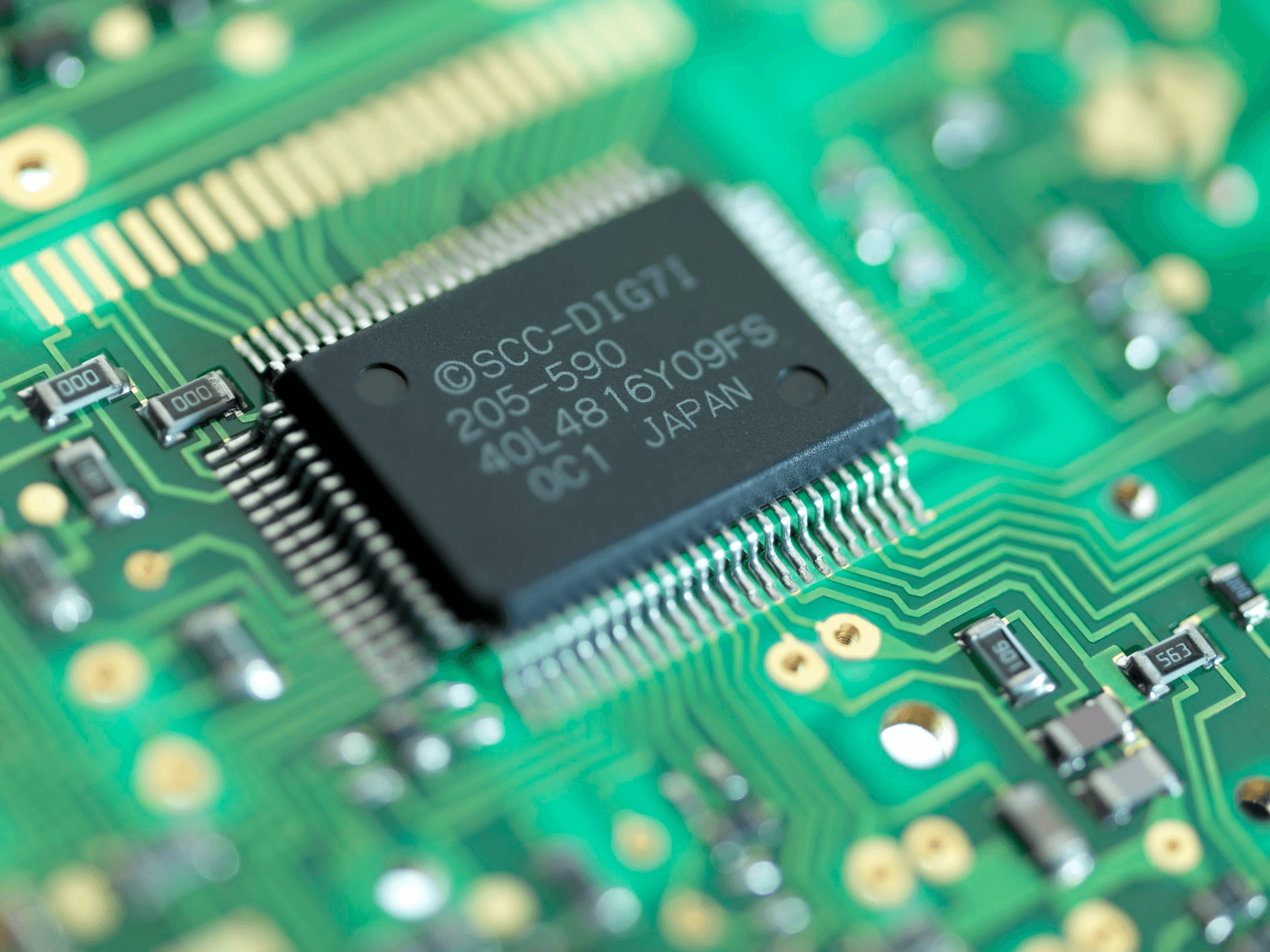
Integrated circuits represent 70 to 80% of the BOM cost and require the most rigorous sourcing verification. ICs should have no association with Chinese manufacturing at any stage of the production process, including wafer fabrication, die packaging, and final testing.
Best practice for active component procurement:
Purchase directly from the IC manufacturer or from authorized distributors with documented chain-of-custody
Request country-of-origin certificates for each IC, specifying fabrication, packaging, and test locations
Avoid gray market or broker-sourced ICs, which carry higher risk of counterfeit or non-compliant origins
Maintain a traceable procurement record that can be audited by the end customer or a government contracting officer
Large and Specialty Components
Connectors, enclosures, heatsinks, and other mechanical or electromechanical components require thorough origin verification. In cases where no non-Chinese alternative exists for a specific component, the engineering team has two options: redesign the circuit to use a compliant alternative, or implement a rigorous incoming inspection protocol that verifies origin and authenticity for each received batch.
Manufacturing Location Selection
While U.S.-based manufacturing offers strong marketing value and simplified compliance documentation, production costs in the United States are significantly higher than in other compliant regions. For many drone component manufacturers, the optimal strategy is to select a manufacturing partner in a country that combines competitive pricing with verified compliance credentials.
Compliant manufacturing locations with established electronics production capabilities include:
Mexico: Geographic proximity to the U.S., USMCA trade agreement benefits, growing aerospace electronics sector
Estonia: EU member, NATO country, emerging hub for defense electronics manufacturing
Thailand: Mature electronics manufacturing infrastructure, competitive labor costs, established supply chains for passive and PCB components
Vietnam: Rapidly growing electronics sector, though supply chain traceability maturity varies by manufacturer
The choice of manufacturing location should be documented and made available to customers as part of the compliance package.
Avoiding Deceptive Sourcing Practices
One of the most significant compliance risks in the NDAA and EO 13981 landscape is deceptive manufacturing. Some manufacturers produce components in China and then relabel or repackage them in a compliant country to create the appearance of non-Chinese origin.
Verification mechanisms that protect against this risk include:
On-site manufacturing audits conducted by the buyer or a third-party auditor
Serialized traceability systems that link each unit to a specific production batch and facility
Transparency documentation packages that include photographs, production logs, and material certificates
Authentication processes that allow end customers to independently verify manufacturing origin
Organizations that invest in verifiable compliance documentation build significantly stronger credibility with defense procurement officers and prime contractors.
Cost Implications of Full NDAA and EO 13981 Compliance
Achieving genuine NDAA and EO 13981 compliance at the component level typically increases manufacturing costs by 50 to 100% compared to equivalent Chinese-sourced production. This cost increase reflects higher labor rates, smaller production volumes at non-Chinese facilities, and the administrative overhead of maintaining full supply chain documentation.
Clear communication with customers about these cost drivers is essential. Most U.S. defense contractors and government buyers recognize that genuine compliance certification carries a cost premium and view it as a competitive differentiator rather than a barrier.
BotBlox publishes full NDAA compliance documentation, including Certificates of Conformity and country-of-origin records, for its NDAA Compliant Series. These documents are available for download and can be included directly in procurement compliance packages.
Key Takeaways for Drone Component Designers
NDAA Section 817 and Executive Order 13981 create a unified compliance framework that applies to nine categories of critical UAS components
PCB-level compliance requires verifying the origin of the board itself, all passive and active components, process chemicals, and mechanical parts
Active components (ICs) carry the highest compliance risk and require documented chain-of-custody from fabrication through final test
Manufacturing in compliant countries such as Thailand, Estonia, Mexico, or the UK provides a cost-effective alternative to U.S.-based production
Deceptive relabeling practices are a real risk; verification audits and serialized traceability systems are essential countermeasures
Full compliance typically increases costs by 50 to 100%, but genuine certification is a competitive advantage in defense procurement
For questions about BotBlox NDAA compliance or to request component-level country-of-origin documentation, contact the team at info@botblox.io.
References
NDAA Fiscal Year 2023, Section 817 (U.S. Congress)
Executive Order 13981 (Federal Register)


