BotBlox Compact Pressure-Tolerant Ethernet Infrastructure
4 min read

Author
Product Updates
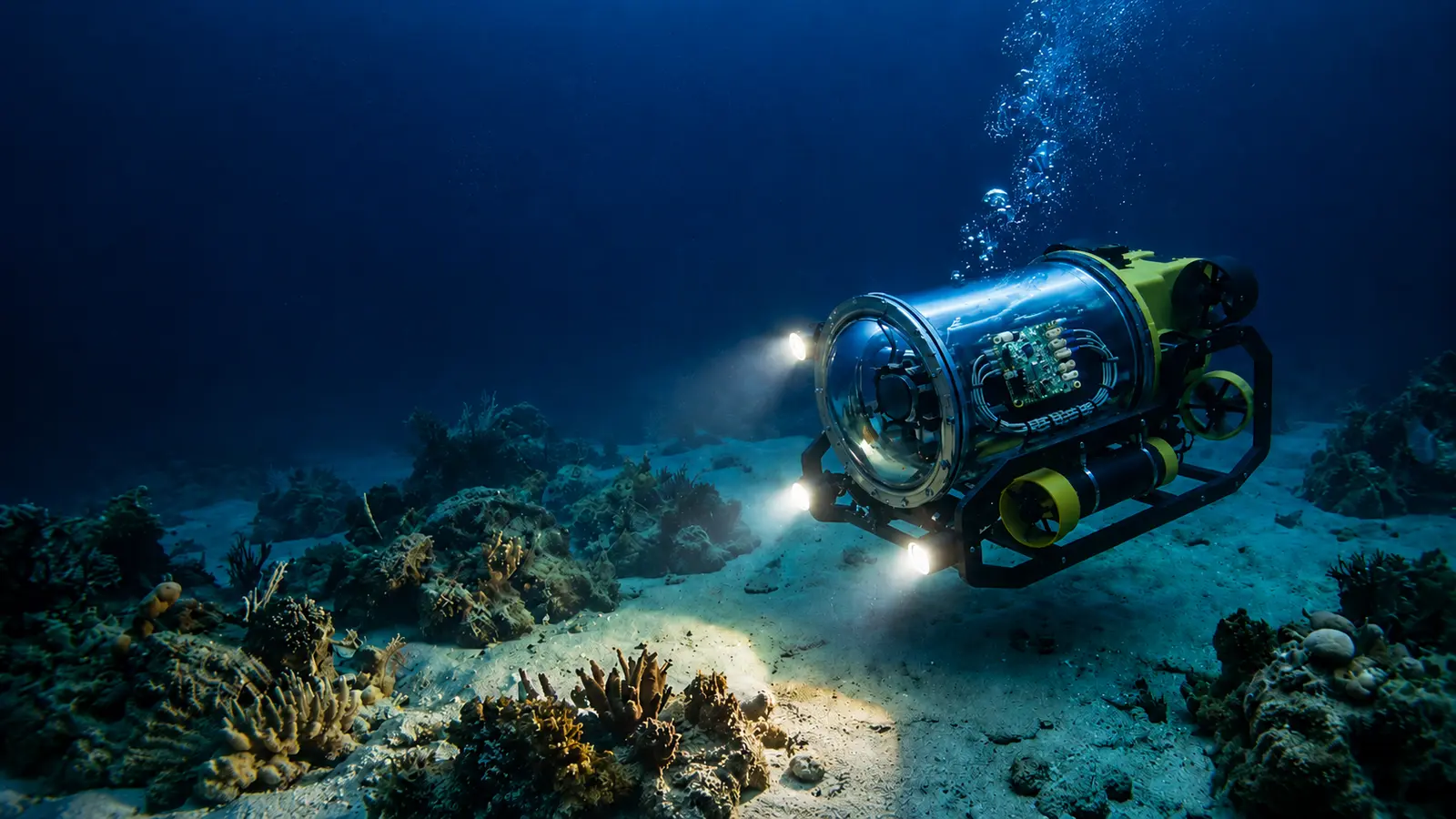
BotBlox specializes in building compact, rugged Ethernet infrastructure for autonomous platforms operating in extreme environments. From high-altitude imaging drones to deep-sea remotely operated vehicles (ROVs), our embedded Ethernet switches are designed to maintain full network performance where standard commercial hardware fails.
This article covers the pressure tolerance testing conducted on BotBlox hardware, validating its suitability for subsea deployments at depths exceeding 6,000 meters.
Why Pressure Tolerance Matters for Underwater Ethernet
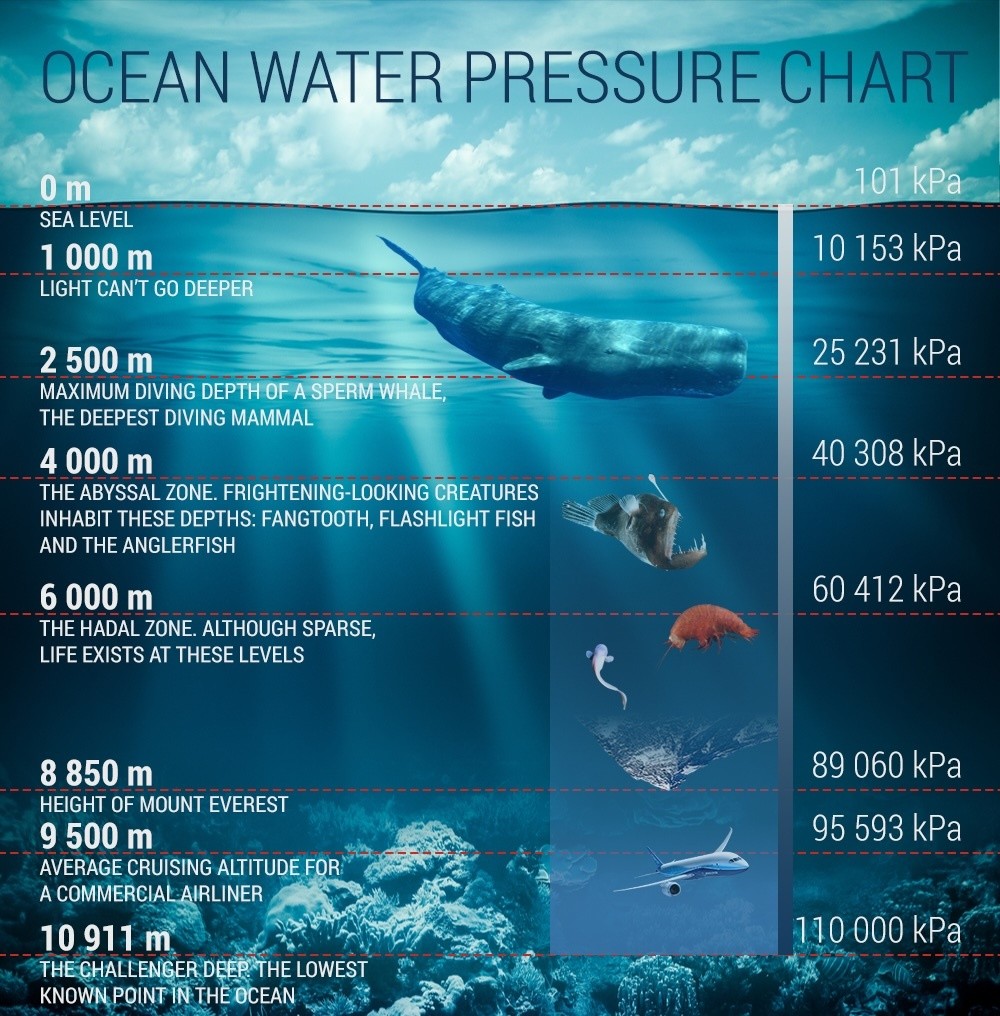
Underwater systems face one of the harshest operating environments on Earth. At the bottom of the Challenger Deep, the deepest known point in the ocean, hydrostatic pressure reaches approximately 110,000 kPa (16,000 PSI or 1,100 Bar). To put this in perspective, that is equivalent to the pressure of 100 adult elephants standing on a surface the size of a human head.
High pressure poses two primary risks to electronic hardware:
Sealed or hollow components (such as electrolytic capacitors, connectors with air gaps, or potted enclosures with voids) can collapse or crack under hydrostatic compression.
Piezoelectric elements (such as certain crystal oscillators) can shift frequency or fail entirely when subjected to sustained pressure.
Most commercial Ethernet switches are not designed or tested for pressure tolerance. This makes deep-sea connectivity expensive, often requiring custom pressure housings that add weight, volume, and cost to subsea systems.
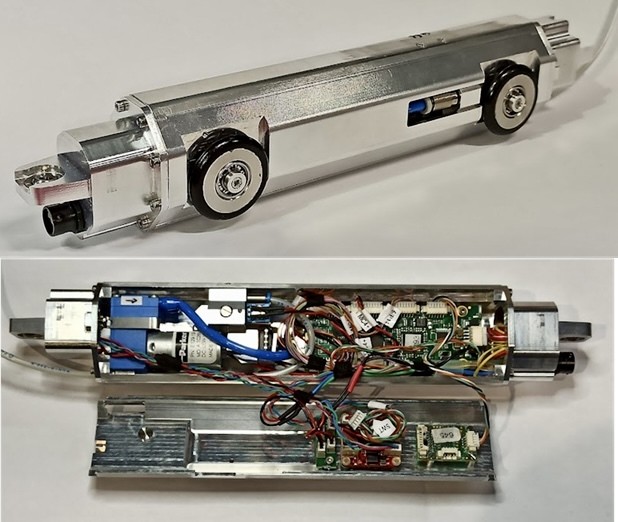
BotBlox hardware addresses this gap by offering bare-board Ethernet switches that can operate unpressurized, directly immersed in dielectric fluid, at depths far exceeding typical subsea operating envelopes.
Test Partnership and Methodology
BotBlox partnered with the Global Foundation for Ocean Exploration to validate pressure tolerance under controlled laboratory conditions.
Test Setup
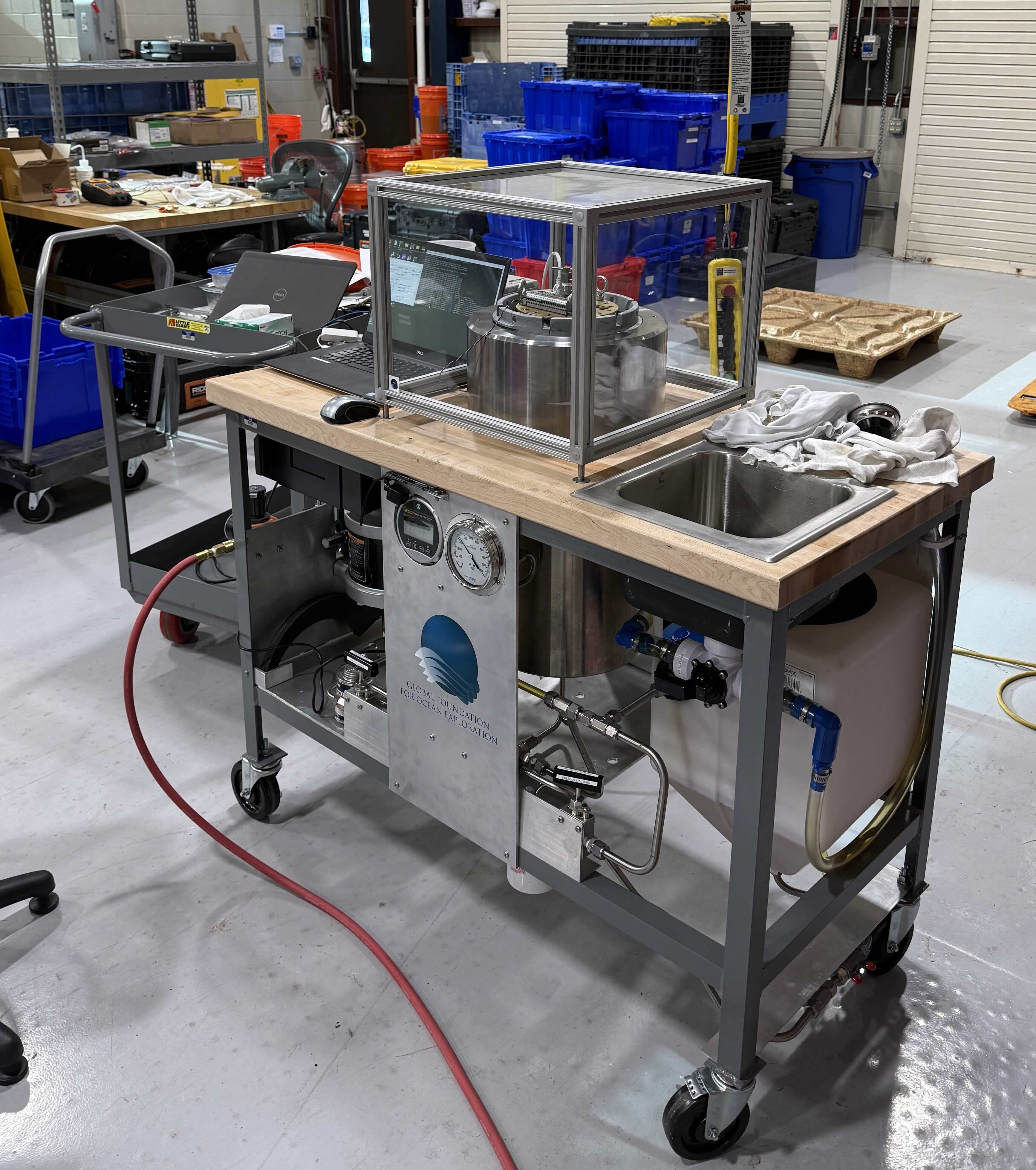
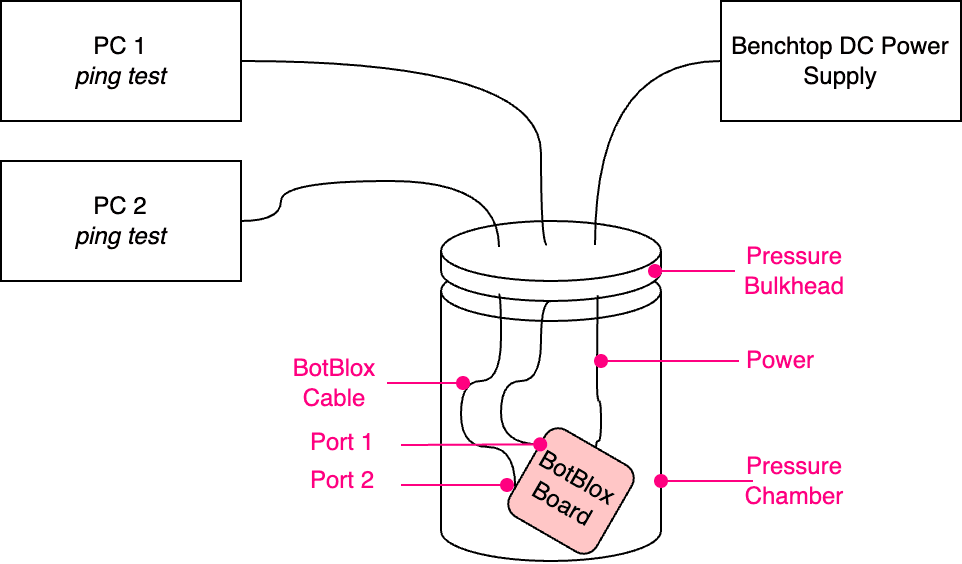
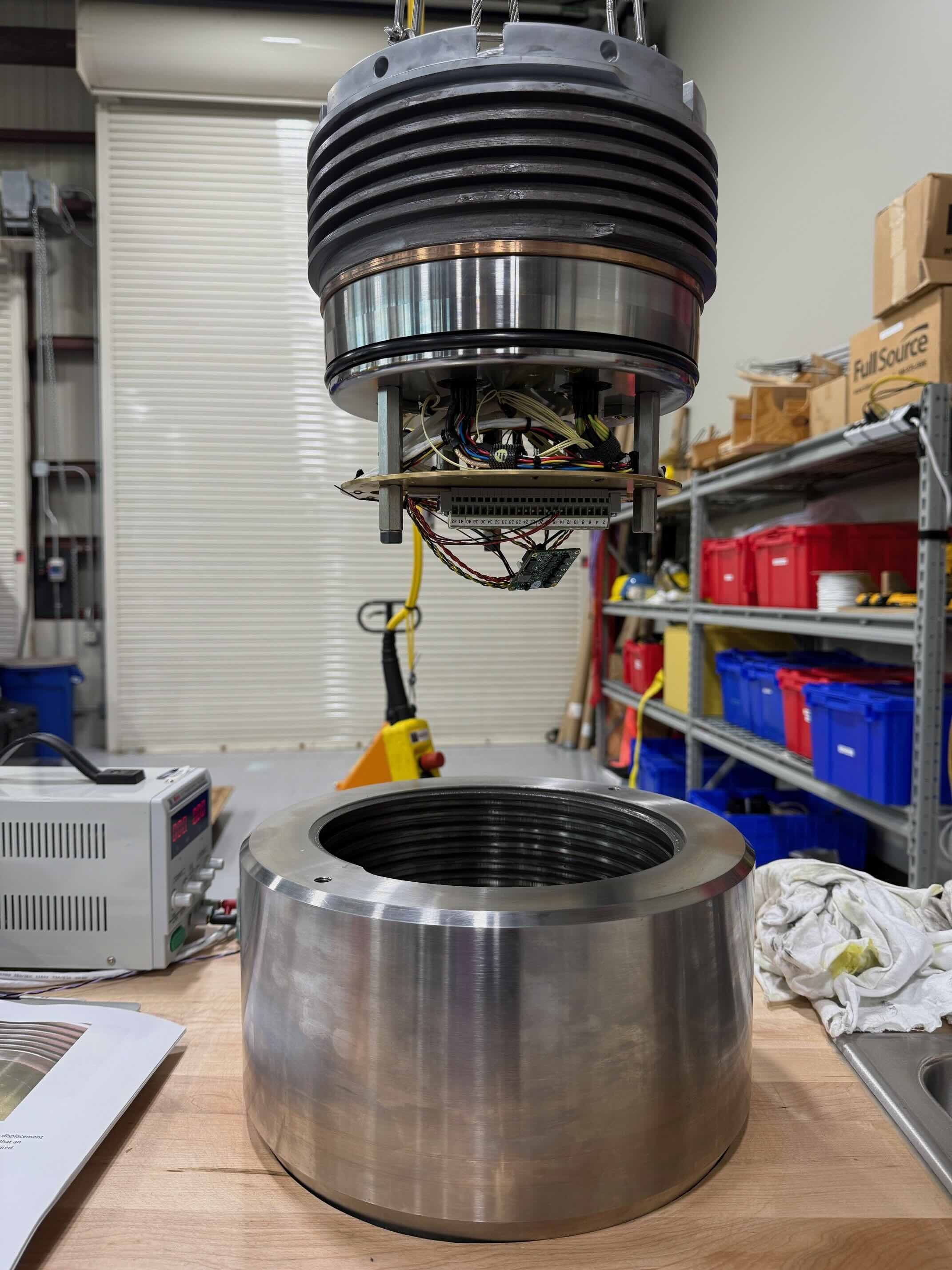
Engineers submerged BotBlox boards in Shell Diala transformer oil (a standard dielectric fluid used in subsea electronics) inside a hydraulic pressure chamber. The boards were powered at 12V DC and connected to external PCs for continuous network monitoring.
Two tests were conducted at each pressure level:
Continuous ping test to verify basic connectivity and detect any packet loss
IPerf throughput test to measure sustained data transfer rates under load
Test Parameters
Parameter | Value |
|---|---|
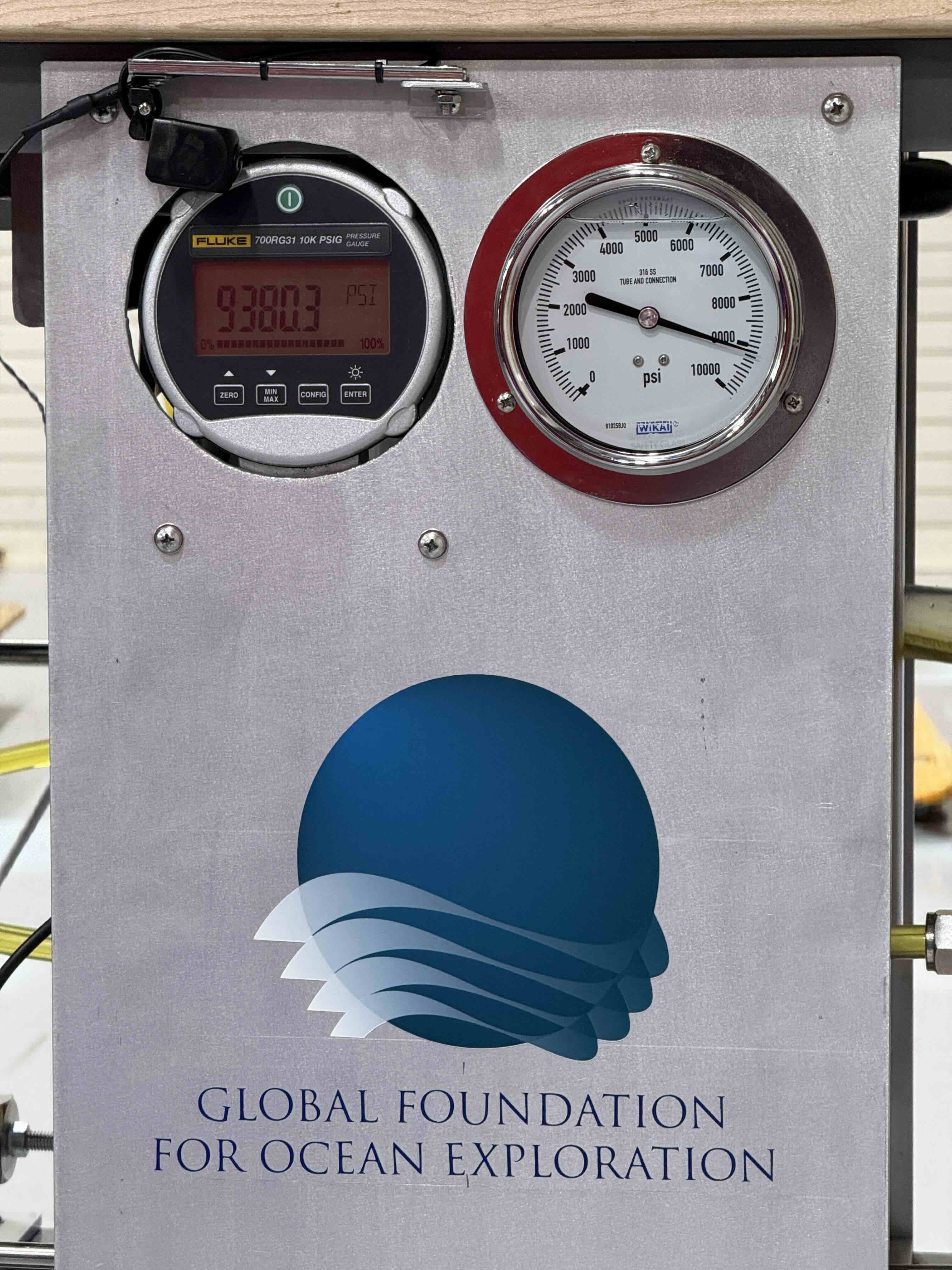
Pressure gauge | FLUKE 700R (Serial: 5499201, 4.04) |
Input voltage | 12V DC |
Test temperature | Ambient (room temperature) |
Dielectric fluid | Shell Diala transformer oil |
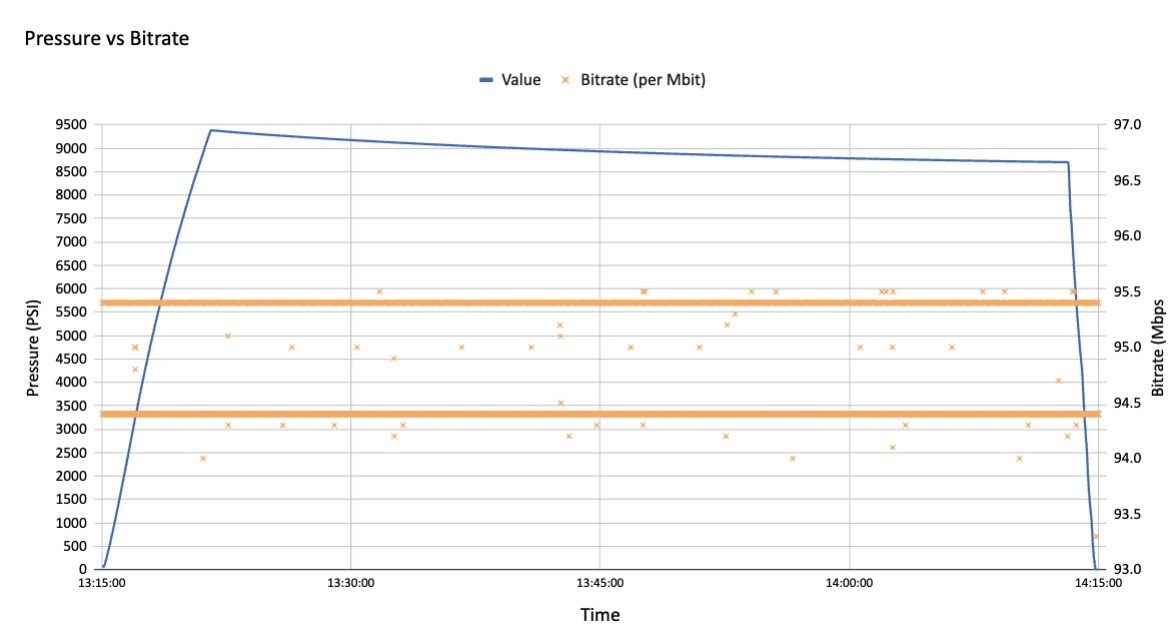
Maximum pressure | 9,380 PSI (equivalent to 6,000 meters depth at 105% margin) |
The maximum test pressure of 9,380 PSI represents 105% of the calculated hydrostatic pressure at 6,000 meters depth, providing a safety margin above the target operating envelope.
Test Results
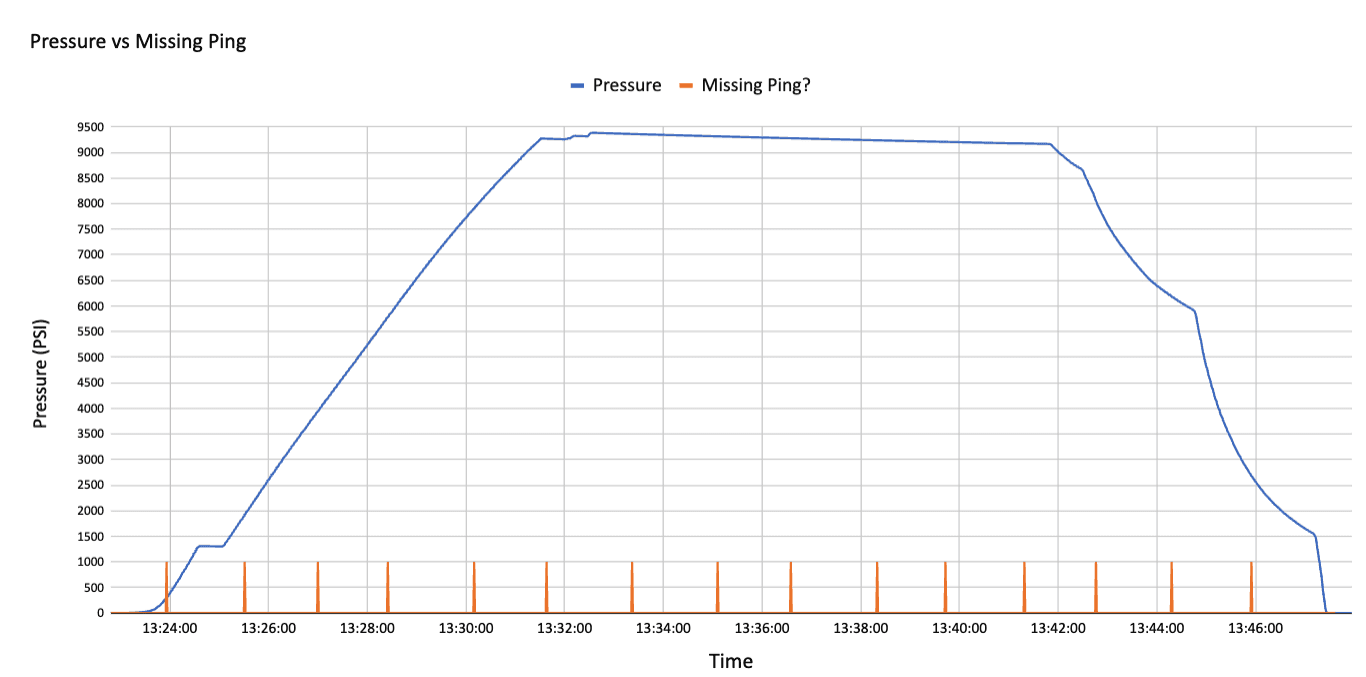
Ping Test (25 minutes)
The continuous ping test ran for 25 minutes across the full pressure range from ambient to 9,380 PSI. No packet loss was recorded at any pressure level. The switches maintained uninterrupted connectivity throughout the entire pressure cycle, including pressurization and depressurization phases.
IPerf Throughput Test (60 minutes)
The sustained throughput test ran for 60 minutes at maximum pressure. The measured bit rate remained between 94 Mbps and 95.5 Mbps on a 100BASE-T (100 Mbps) connection. This is identical to the throughput measured at ambient pressure, confirming that hydrostatic pressure has no measurable effect on Ethernet switching performance.
Key finding: BotBlox embedded Ethernet switches maintain full network performance at pressures equivalent to 6,000 meters ocean depth, with zero degradation in connectivity, throughput, or packet handling.
Qualified Products
The following BotBlox products have been validated for pressure-tolerant operation based on these test results:
SwitchBlox Industrial (revision D and later)
UbiSwitch (revision A and later)
UbiSwitch Baseboard, gigabit ports only (revision A and later)
These products can be deployed in oil-filled enclosures or pressure-compensated housings without requiring a separate pressure vessel, significantly reducing system weight, volume, and integration complexity for subsea platforms.
Applications
Pressure-tolerant Ethernet infrastructure enables reliable high-bandwidth networking for a range of subsea systems:
ROVs (Remotely Operated Vehicles): Multi-camera video feeds, sonar data, and telemetry over a single Ethernet backbone
AUVs (Autonomous Underwater Vehicles): Onboard sensor networks connecting cameras, depth sensors, and navigation systems
Subsea observatories: Long-duration deployments requiring maintenance-free Ethernet connectivity at depth
Tethered underwater drones: High-bandwidth data transfer over tether cables to surface operators
Conclusion
BotBlox embedded Ethernet switches have been independently tested and validated for operation at pressures exceeding 9,000 PSI, equivalent to depths beyond 6,000 meters. With no measurable impact on network performance, these products provide a compact, lightweight alternative to traditional pressure-housed networking equipment for subsea applications.
For detailed test data or integration guidance for subsea deployments, contact the BotBlox engineering team at info@botblox.com.


