Blue Robotics Ethernet Switch: Test Results
5 min read

Author

Performance & Benchmarks
BotBlox partnered with Blue Robotics to develop an Ethernet switch purpose-built for subsea robotics applications. Once the hardware was finalised, it underwent a comprehensive test programme covering power input range, port performance, and temperature extremes.
Below are the full results.
Test Setup
Ambient temperature: 25°C
Conditions: Sea level (101 kPa)
Primary power source: 30V
Maximum cable length: 1 metre
Networking: 100 Mbps between ports 1 and 5
Main Power Input Tests
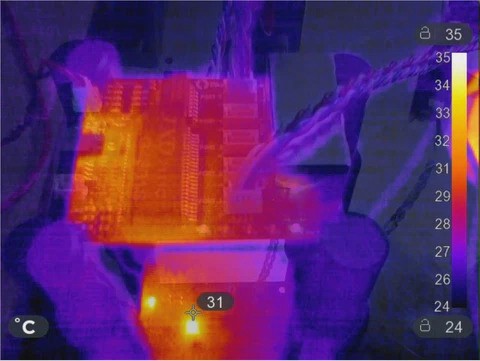
5.5V Input
Power consumption: 247 mW. Voltage rails stable at 5.09V, 3.31V, and 1.019V. Maximum board temperature: 31°C. ✔ Pass
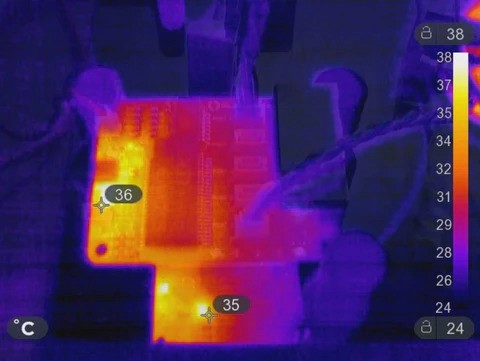
30V Input
Power consumption: 270 mW. All voltage rails at specification. Maximum board temperature: 36°C. ✔ Pass
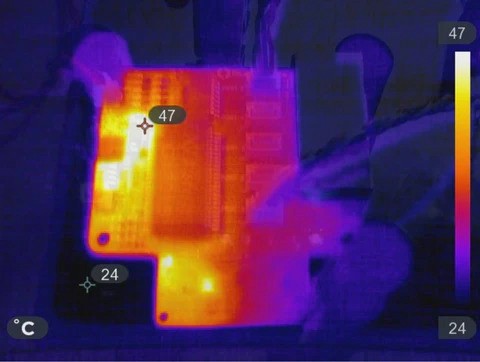
60V Input
Power consumption: 540 mW. All voltage rails stable. Maximum board temperature: 47°C. ✔ Pass
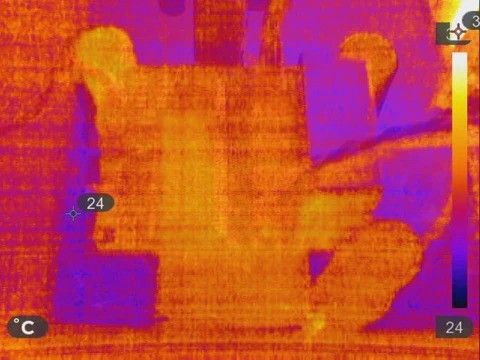
Reverse Polarity Protection (−60V)
All rails dropped to near-zero. No temperature rise. Board fully protected. ✔ Pass
Auxiliary Power Input
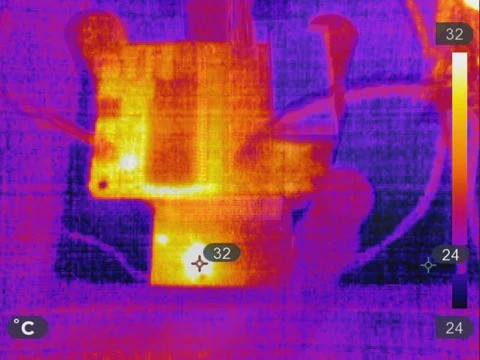
5V Auxiliary Input
Idle power consumption: 230 mW. All voltage rails at specification. Maximum board temperature: 32°C. ✔ Pass
Port Networking
All port-to-port combinations were tested across both Molex and RJ45 connectors (ports 1–2, 2–3, 3–4, 4–5). Every test achieved a consistent 94.1 Mbps data rate. ✔ All Pass
Temperature Performance
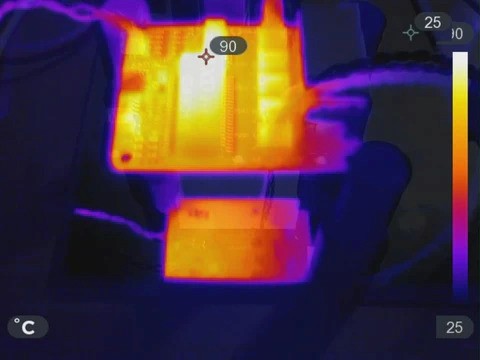
High Temperature — 85°C, 3 minutes
Data rate maintained at 94.1 Mbps throughout. No degradation observed. ✔ Pass
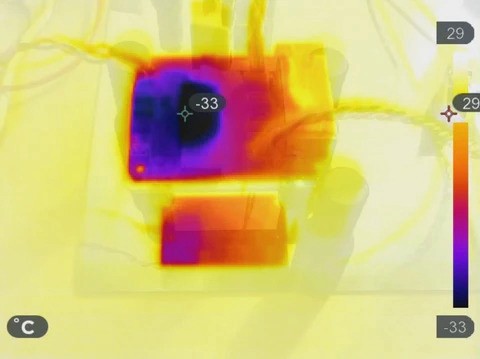
Low Temperature — −33°C, 3 minutes
Data rate maintained at 94.1 Mbps throughout. No degradation observed. ✔ Pass
Results Summary
Test | Key Metric | Result |
|---|---|---|
5.5V input | 247 mW, 31°C max | ✔ Pass |
30V input | 270 mW, 36°C max | ✔ Pass |
60V input | 540 mW, 47°C max | ✔ Pass |
Reverse polarity (−60V) | Rails at 0V, no heat | ✔ Pass |
5V auxiliary input | 230 mW, 32°C max | ✔ Pass |
Port networking (all ports) | 94.1 Mbps | ✔ Pass |
High temperature (85°C) | 94.1 Mbps maintained | ✔ Pass |
Low temperature (−33°C) | 94.1 Mbps maintained | ✔ Pass |
The Blue Robotics Ethernet Switch passed every test across its full operating envelope: 5.5–60V main power input, 5V auxiliary input, consistent 94.1 Mbps across all ports, and stable operation from −25°C to +95°C ambient.


